Incineration at high temperatures involves heating up of waste at high temperatures so as to minimize the amount of waste while ensuring that the micro-organisms within the waste are destroyed. This process is mainly carried out on specific types of waste including some forms of medical and industrial wastes depending on the nature of the waste.
Quick Answer
High-temperature incineration is a method of treating wastes whereby high temperatures are employed in the thermal breakdown of wastes. It helps in waste reduction, destruction of microorganisms, and destruction of organic compounds, but the ash produced and the flue gases have to be handled properly.
How Does High-Temperature Incineration Work?
As we know incineration process can not give us the desired result without using high-temperature. It can work well, so Incineration involves step by step process designed to efficiently break down waste materials and reduce harmful emissions.
Pre-treatment: Waste is put through a process of sorting and shredding to ensure a consistent material flow and optimize the process of burning within the hospital incinerator.
Incineration chamber and high-temperature: We put Pre-treated waste into a furnace where it is burned at extremely high temperatures. This strong heat breaks down the waste into smaller molecules.
Ash removal and flue gas treatment: The combustion process produces ash, a left material that requires proper disposal. Additionally, flue gases contain emissions are treated to remove pollutants before being released into the atmosphere.
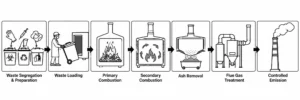
1. Waste Preparation
Waste is segregated and, where appropriate, prepared for controlled feeding into the incinerator.
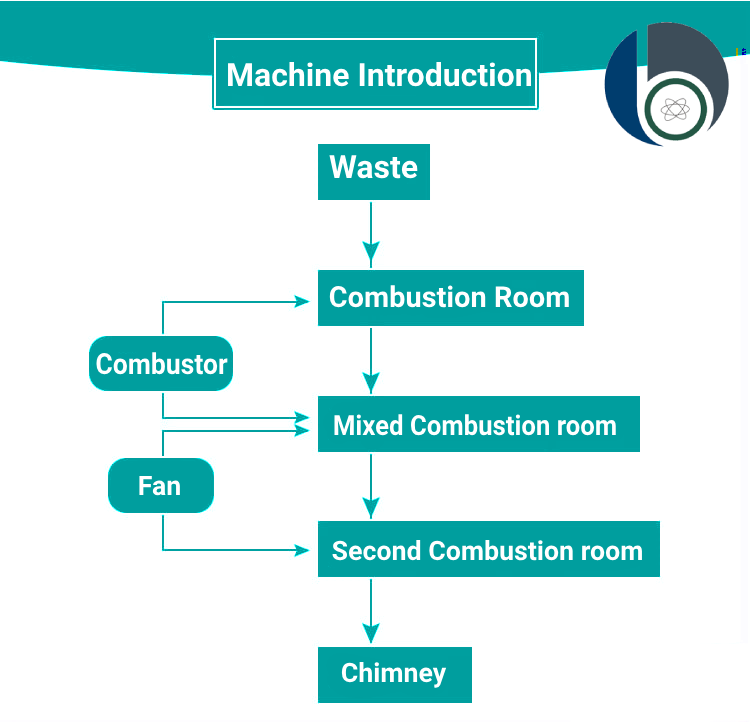
2. Primary Combustion
The prepared waste enters the primary chamber, where controlled heating and combustion break down combustible materials.
3. Secondary Combustion
Combustion gases may pass through a secondary chamber to promote further oxidation of combustible gases.
4. Ash Removal
Residual ash is collected and handled according to the applicable waste-disposal requirements.
5. Flue Gas Treatment
Flue gases can contain particulate matter and other pollutants, so appropriate emission-control equipment is used before discharge.
High-Temperature Medical Waste Incinerators

High-temperature medical waste incinerators play a vital role in the compliant and safely dispose of various types of healthcare and clinical waste. These waste incinerator systems are used by hospitals, dental clinics, veterinary centers, care homes, universities, research labs, and other healthcare-related facilities. They securely destroy yellow-bagged clinical waste, which includes highly infectious materials, sharps, cytotoxic or cytostatic waste, pharmaceutical waste, and anatomical waste.
These incinerators are designed to safely destroy yellow-bagged clinical waste, which typically includes highly infectious materials, sharps (like needles and scalpels), cytotoxic and cytostatic waste, expired or unused pharmaceuticals, and anatomical waste such as human tissues or organs. Temperatures of operation vary depending on the incinerator type, the nature of the waste materials, and operating requirements. Some of the incinerators run at temperatures of about 850°C – 1200°C, but the required temperatures can only be identified based on the waste materials. When operated under appropriate conditions, high-temperature incinerators can achieve substantial destruction of combustible organic material and significantly reduce waste volume.
Moreover, modern medical incinerators are equipped with advanced emission control systems that minimize the release of harmful pollutants, ensuring compliance with stringent environmental regulations. This makes them an essential solution for healthcare facilities seeking a reliable and regulatory-compliant method of hazardous waste disposal.
High-Temperature Incineration Process
| Stage | What Happens |
|---|---|
| Waste preparation | Waste is segregated and prepared for treatment |
| Loading | Waste enters the incinerator |
| Primary combustion | Combustible material is thermally broken down |
| Secondary combustion | Combustion gases receive further treatment |
| Ash removal | Residual ash is collected |
| Flue gas treatment | Pollutants are reduced using emission-control systems |
| Final handling | Residues and treated gases are managed according to requirements |
What Types of Medical Waste are Incinerated?
It is essential to consult your waste vendor’s Waste Acceptance Policy, which clearly defines the types of waste they accept, the conditions required for acceptance, and any restrictions that may apply. Our medical waste incinerators accept following types of waste:
- Pathological Waste: Includes human or animal tissues, organs, limbs, surgical specimens, and other body parts. These must be free of chemical preservatives.
- Paraffin Wax Blocks: Tissue-embedded blocks from humans or animals, required to be packaged according to the detailed packaging guidelines available on our website.
- Non-Hazardous Pharmaceutical Waste: Consists of pharmaceuticals not classified as hazardous by relevant state authority. Proper segregation and packaging are still required.
- Trace Chemotherapy Waste: Includes items contaminated by, or that have previously contained, chemotherapeutic agents. These must be handled as trace hazardous waste, following specific disposal guidelines.
Operational Costs of Medical Waste Incinerators
Running a medical waste incinerator comes with several expenses:
- Initial investment in equipment and setup
- Fuel consumption, especially for high-temperature operations
- Labor and maintenance to ensure 24/7 safe operation
- Regulatory compliance, such as emissions controls and certifications
Efficient management of these costs ensures that incineration remains one of the most reliable and sustainable methods for clinical waste disposal.
What Temperature Does a High-Temperature Incinerator Reach?
The actual temperature within the incinerator can fluctuate depending on the specific waste composition and the operational stage. However, it’s crucial to maintain the minimum operating temperature for efficient and clean combustion.
- High-temperature incineration utilizes intense heat to break down waste materials.
- The process involves pre-treatment, combustion, and gas treatment to minimize harmful emissions.
- Incinerators typically operate between 850°C and 1200°C for efficient and clean combustion.
Did You Know?
Modern incineration facilities use sophisticated pollution control systems to minimize the environmental impact. These systems can capture and remove harmful pollutants like acid gases, heavy metals, and particulate matter from the flue gas.
Advantages of High-Temperature Incineration
- Significant volume reduction
Reduces the amount of solid waste requiring further disposal. - Pathogen destruction
Appropriate thermal treatment can destroy microorganisms present in suitable waste streams. - Suitable for selected waste streams
Can treat certain wastes that are difficult to recycle or otherwise process. - Potential energy recovery
Some larger facilities can recover heat for useful energy applications.
Limitations
- Emissions require control
Combustion gases must be appropriately treated. - Residual ash remains
Incineration transforms waste rather than making all residues disappear. - Operating costs
Fuel, maintenance, labor and emission-control systems contribute to operating expenses.
Looking for High-Temperature Incinerator?
Connect us at info@bionicsscientific.com
Certifications & Quality Compliance
| Standard | Cert. No. | Scope | Valid Until |
|---|---|---|---|
| ISO 9001:2015 (QMS) | 184876 | Lab, scientific & cleanroom equipment mfg. | 30-03-2029 |
| CE (MDD 93/42/EEC) | 184877 | Products as per annexure | 30-03-2029 |
| GMP | 184878 | Includes fume hood and a biosafety cabinet. | 30-03-2029 |
| NSF/ANSI 61 | 183884 | Bio-safety cabinet, lab & scientific equipment | 08-03-2027 |
Frequently Asked Questions about High-Temperature Incineration
What is high-temperature incineration?
It is the method of waste treatment carried out under controlled conditions with the use of high temperature for combustion, reduction of waste mass and destruction of pathogens and contaminants.
What temperature does an incinerator run at?
This varies from one incinerator to another. However, the temperature range in which a high-temperature incinerator runs ranges between 850°C and 1200°C.
What waste products can be incinerated?
Some of the waste products that can be incinerated include but are not limited to medical, pathological, pharmaceutical, industrial and municipal waste products.
What is the mechanism of working of medical waste incinerator?
The medical waste incinerator utilizes thermal decomposition via controlled burning for the treatment of appropriate healthcare wastes. The operation process typically consists of waste loading, primary and secondary burning, ash removal and flue gases treatment.
What becomes of ash after burning?
Ash formation occurs after burning, and it should be collected and properly managed according to its specific properties.
Is all of the waste eliminated by incineration?
Not all waste is eliminated through incineration because although it helps to decrease the volume of waste and destroy combustible components of the waste, there will still be ash formation and flue gases formed.
What affects incinerator operating costs?
Operating costs depend upon the amount of waste and its composition, fuel usage, electricity usage, labor, maintenance, emissions control systems and other factors.
Do emission control systems need to be used?
The necessity to use emission control systems depends upon incinerator type, waste stream, facility’s location and other criteria.