Previously, biomedical waste management was just another routine work; however, now it is an absolute necessity for all hospitals, laboratories, research institutions, and other healthcare facilities. Improper disposal of biomedical waste can have grave consequences for your health, damage the environment, and invite severe penalties under the law. Therefore, a medical waste incinerator plays a crucial role in these situations.
In a fiercely competitive healthcare sector, selecting the right incinerator is no longer just about proper disposal. It also depends on efficiency and effectiveness. This blog post aims to provide helpful information about biomedical waste incinerators, their operation, and the characteristics of a high-performing one.
What Is a Medical Waste Incinerator in India?
Incinerators for biomedical waste are special devices that are capable of burning biomedical waste at high temperatures. Incineration involves burning hazardous waste in order to completely destroy it. It involves burning biomedical waste, such as pharmaceuticals, sharp materials, and infectious waste.
How a Medical Waste Incinerator Works in India (CPCB Standard)
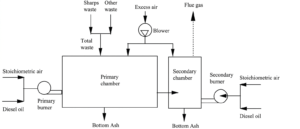
A medical waste incinerator uses controlled combustion to treat eligible biomedical waste. In a typical dual-chamber system, waste is initially burned in the primary chamber, while gases pass into a secondary chamber for further combustion. An appropriate air-pollution-control system treats the exhaust gases before release. Operating temperatures, emissions limits and required equipment depend on the applicable regulatory requirements and the installed system.
Working of Medical Waste Incinerator (With Diagram)
Medical waste incineration occurs through a double-chamber burning system that helps to burn all the hazardous waste thoroughly.
Waste Feeding → Primary Chamber (800-900°C) → Secondary Chamber (1000-1200°C) Gas Treatment System → Treated Flue Gas
In the first chamber, waste is burnt partly, whereas in the second chamber, it is completely burnt due to a higher temperature.
There are also advanced models that have filters for removing all kinds of hazardous gases from the emissions.
CPCB Guidelines for Medical Waste Incinerators in India
Biomedical waste incineration in India is governed by the Bio-Medical Waste Management Rules and applicable standards. Under the prescribed incineration standards, the primary chamber must operate at a minimum temperature of 800°C, while the secondary chamber must maintain 1050°C ± 50°C. The secondary chamber gas residence time must be at least two seconds, and combustion efficiency must be at least 99%.
Applicable emission standards include a particulate matter limit of 50 mg/Nm³. The incinerator must also have suitable air-pollution-control equipment and meet the relevant operating, monitoring, and emission requirements.
Before purchasing a hospital incinerator, confirm the applicable approvals, authorizations, emission-test requirements, and specifications for the proposed installation with the relevant State Pollution Control Board or Pollution Control Committee. Compliance depends on the actual system and its operation.
Waste Types Processed in an Incinerator
The incineration system for the treatment of medical waste is able to process different types of waste. This includes infectious waste, such as used gloves and dressings; pathological waste, which includes tissues and organs; pharmaceutical waste, comprising old medicines; and sharps, which include syringes and needles.
For each waste type, temperature requirements vary depending on the amount of energy required to destroy the material. This information explains why incinerators are designed to regulate temperature levels.
The Main Characteristics of High-Performing Medical Waste Incinerators
In choosing the type of equipment, it is crucial to consider its performance and durability. High-performance medical waste incinerators should work efficiently at high temperatures, consume fuel economically, and release low levels of emissions into the environment.
Bionics Scientific Technologies pays particular attention to building reliable medical waste disposal facilities that will be environmentally safe and operate consistently throughout their service life. Moreover, they implement the best technologies for burning medical waste.
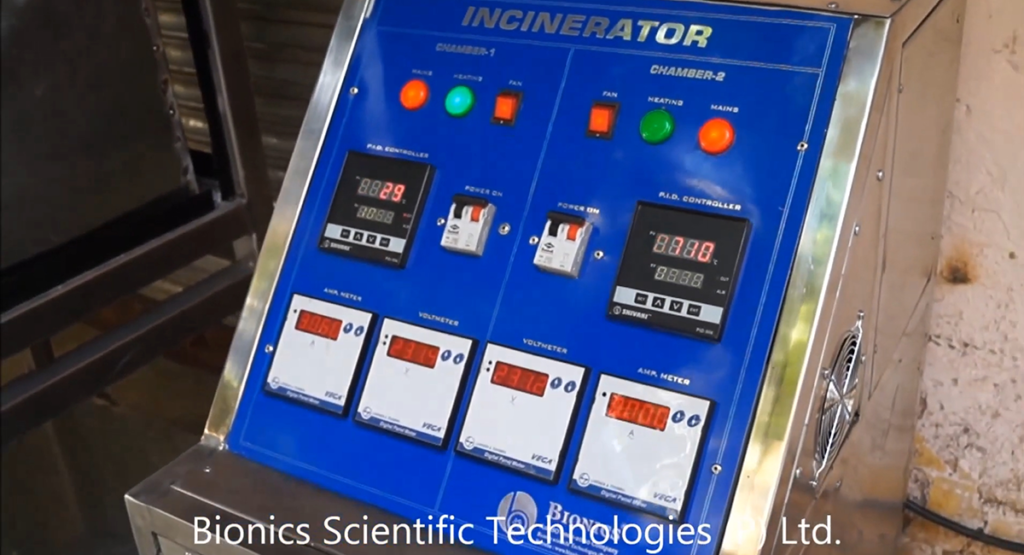
Automation is yet another characteristic of high-performing medical waste incinerators. With modern waste incineration equipment, one will benefit from having digital control panels and other automated features that simplify their use and operation.
Medical Waste Incinerator Specification Chart
The specifications of a medical waste incinerator vary by model, waste throughput, and installation requirements. The following table highlights key parameters to verify when comparing systems.
|
Parameter |
Specification / What to Verify |
|
Primary chamber temperature |
Minimum 800°C under applicable biomedical waste incineration standards |
|
Secondary chamber temperature |
1050°C ± 50°C under applicable standards |
|
Chamber design |
Dual-chamber system; please confirm the model configuration. |
|
Fuel type |
Confirm compatible fuel options with the manufacturer. |
|
Processing capacity |
Select according to required waste throughput and verified model data. |
|
Combustion efficiency |
At least 99%, as specified in applicable standards |
|
Emission control |
Air-pollution-control equipment appropriate to applicable emission requirements |
|
Control system |
Digital or PLC-based, depending on model |
|
Construction material |
Verify refractory lining and material specifications. |
|
Safety measures |
Confirm available alarms, interlocks, and automatic shutdown features |
Biomedical Waste Incinerator Price in India (Factors Explained)
The biomedical waste incinerator price is based on its capacity, degree of automation, kind of fuel used, and adherence to the CPCB norms in India, while an excellent-quality hospital incinerator machine would help ensure efficiency, low emissions, and durability.
Why Don’t Most Incinerators Work in India?
Several organizations install cheap incinerators without considering their future performances. The incinerators do not work effectively because of incomplete combustion, emissions, and non-compliance with CPCB regulations.
Such problems cause the incinerators to use excessive fuel, malfunction constantly, and have legal problems. A high-quality biomedical waste incinerator is the solution to these problems.
Application of Medical Waste Incinerator
A medical waste incinerator can be used for various applications, including hospitals, diagnostic laboratories, pharma companies, research centers, veterinary hospitals, and medical waste treatment facilities. Each of these applications demands efficient and consistent service.
For instance, in heavy-duty applications like hospitals, continuous working is important. That’s why it makes sense to purchase quality equipment to avoid any disruptions during the process of waste disposal.
Choosing an Appropriate Medical Waste Incinerator
The appropriateness of an incinerator is determined by several factors, including the size of the establishment, the amount of waste generated, and the rules and regulations. The right equipment for small clinics would be a compact design; however, hospitals would require more high-capacity equipment equipped with automation.
The following factors need consideration: temperature control, emissions regulation, fuel consumption, and durability. Selecting a well-experienced manufacturer can help you obtain an appropriate machine. Customization should also be considered; therefore, you should choose an experienced manufacturer who will develop equipment according to your specifications.
Medical Waste Incineration: Compliance and Environmental Aspects
There are strict laws governing the emissions produced by medical waste incinerators, given the environmental aspects of managing medical waste.
Modern medical waste incinerators are provided with highly efficient filters, which ensure the process of burning medical waste does not pose any threats to the environment. This helps sustain the environment while giving your organization a good reputation.
However, non-compliance will attract heavy penalties and may also result in the suspension of the operations. Therefore, you need to install a modern incinerator, which will comply with all the regulations.
Why Choose Bionics Scientific Technologies?
With over two decades of experience offering equipment for various purposes, both in laboratories and industries, Bionics Scientific Technologies provides superior and tailor-made equipment to suit your requirements.
Our company has technologically advanced incinerators that ensure effective and long-lasting burning processes. We thoroughly check each incinerator for quality before delivering it to customers.
To make sure that the equipment functions well, we offer top-notch after-sale service.
Get Price & CPCB Compliance Report Today.
Non-compliance with CPCB guidelines can shut down your facility and lead to heavy penalties.
Talk directly to our engineers for a free consultation and get a customised biomedical waste incinerator solution.
Why Facilities Prefer Bionics Scientific Technologies
Bionics Scientific Technologies is a reputable manufacturer that has installations in more than 120 hospitals and health care facilities. Our ISO-certified manufacturing facility guarantees consistent performance and compliance.
We provide reliable, CPCB-compliant plants for waste incineration to meet your requirements.
Frequently Asked Questions on Medical Waste Incineration
What is the optimum temperature that should be maintained in a medical waste incinerator?
It should be within the range of 800°C to 1200°C to attain total combustion of medical waste.
What kind of waste can be safely disposed of in a medical waste incinerator?
A medical waste incinerator can treat eligible biomedical waste, subject to applicable regulations and the specifications of the installed system.
How expensive are medical waste incinerators?
The cost will depend on the capacity and features of an incinerator and whether it is automated or not. However, achieving high performance comes with a cost.
Is a medical waste incinerator environmentally friendly?
A medical waste incinerator can help treat eligible biomedical waste when operated correctly with suitable air-pollution-control equipment and in compliance with applicable environmental standards.
What should you check before purchasing a medical waste incinerator in India?
Check the applicable regulatory requirements, required authorisations, emission-test reports, chamber specifications and air-pollution-control system for the proposed installation.
How to choose an incinerator supplier?
You can go for an expert supplier who has relevant industry experience, a CPCB-standard incinerator, good after-sales service, and installations in hospitals or healthcare centers. Customization and service are additional factors.
Cost per kg of burning:
The cost will depend upon the kind of fuel used by the incinerator, its working efficiency, etc. Higher efficiency implies a lesser fuel requirement. Therefore, when considering cost-effectiveness, a higher-quality incinerator proves to be more effective in the long run.
Conclusion
You can rely on the medical waste incinerator to ensure safety, cleanliness, and compliance with environmental standards at your healthcare center. It is therefore important to choose the best system that will serve you well.
Bionics Scientific Technologies provides the most efficient incinerators on the market today. Investing in such high-quality systems will yield future returns.