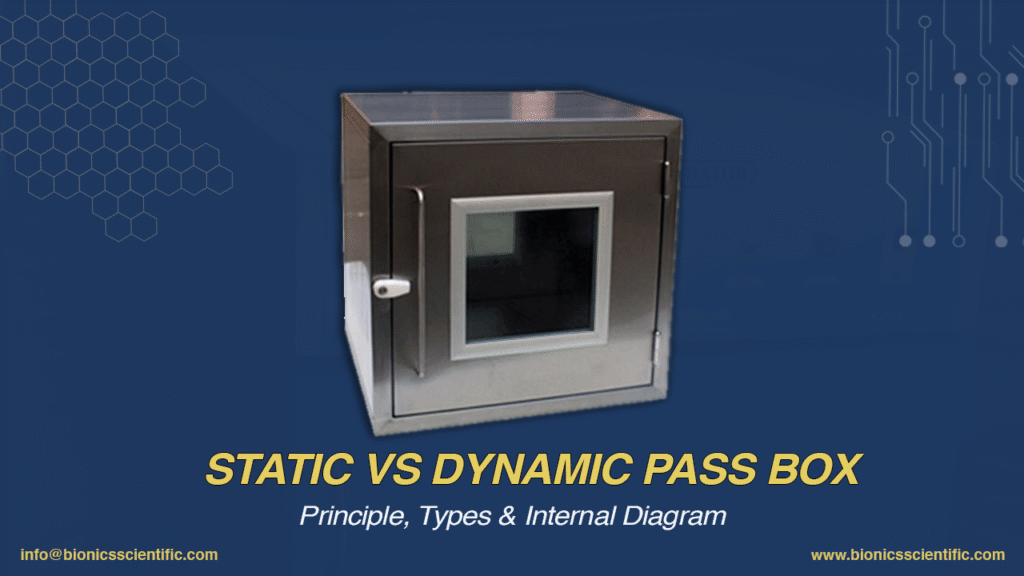
A cleanroom pass box is a sealed transfer enclosure used to transport items from one controlled area to another with minimal chances of contaminations. It uses two interlocking doors whereby it is impossible to have them opened simultaneously.
The two common types include static and dynamic pass boxes. The static pass box mainly depends on isolation and interlocking, while the dynamic pass box depends on HEPA airflow to attain high levels of contamination control.
This guide is aimed at educating you on the types, principle of operation, specifications, applications, validation, maintenance, pricing issues, and selection of pass boxes. One of the necessaryl solution is the cleanroom pass box also known as a pass through chamber which allows for the safe transfer of materials without compromising the sterile atmosphere.
- Table of Contents
- Certifications & Quality Compliance
- Key Features of Cleanroom Pass Through Chamber Interlocking Doors
- Validation and Maintenance of Cleanroom Pass Boxes
- Buying Guide and Custom Designs of Static & Dynamic Pass Box
- Frequently asked questions
- Conclusion: Choosing the Right Pass Box for Cleanrooms
In this blog, we will break down the two main types of pass boxes: static pass boxes and dynamic pass boxes. Their key specifications, differences, applications, validation procedures, industry standards and what to look for in a GMP certified pass box supplier. We will also address commonly searched queries such as:
- Dynamic pass box with HEPA filter price
- GMP certified static pass box supplier
- And more essential buying and compliance considerations
Table of Contents
- What Is a Cleanroom Pass Box?
- Static vs Dynamic Pass Box
- How Does a Pass Box Work?
- Technical Specifications
- Applications
- Validation & Maintenance
- How to Choose a Pass Box
- Price Factors
- FAQs
Whether it is about designing a new cleanroom or upgrading existing setup this guide will help to make an informed, compliant and cost effective decision.
|
Feature |
Details |
|
Main purpose |
Controlled transfer of materials |
|
Main types |
Static and Dynamic |
|
Door system |
Interlocked doors |
|
Static pass box |
No internal HEPA airflow |
|
Dynamic pass box |
HEPA-filtered airflow |
|
Common materials |
Stainless steel |
|
Key applications |
Pharma, biotech, laboratories, food and semiconductor industries |
|
Main benefit |
Helps reduce contamination during material transfer |
What Is a Pass Box and Why Is It Important in Cleanrooms?
A cleanroom pass box also known as a pass through box or pass through chamber is a important piece of equipment used in contamination control. It is an enclosed cabinet with two interlocked doors on opposite sides which is designed to transfer materials, samples or equipment between cleanrooms to a non clean area without compromising air cleanliness.
The advanced door interlocking system makes certain that only one door opens at a time. This prevents cross contamination and maintains cleanroom pressure levels and reduces the risk of airborne particles entering the controlled environment.
Using a pass box in cleanrooms not only ensures safety but efficient material transfer that helps industries comply with GMP that stands for Good Manufacturing Practices and ISO cleanroom standards. These pass through chambers have variety of uses in pharmaceuticals, biotechnology, semiconductor manufacturing and food processing where strict contamination control is essential for product quality and safety.
In essence, a cleanroom pass through box is not just convenient; it is essential for preserving cleanroom integrity and supporting smooth also contamination free operations.
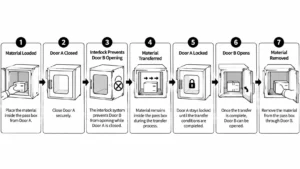
How Does a Cleanroom Pass Box Work?
- Materials are placed inside the pass box.
- The loading-side door is closed.
- The interlocking mechanism prevents the opposite door from opening simultaneously.
- In a dynamic model, filtered air circulates through the chamber.
- After the transfer conditions are met, the receiving-side door can be opened.
- The material is removed without directly opening the cleanroom areas to each other.
Ever thought which Pass Box Static or Dynamic best for your cleanroom requirement?
Get expert guidance and pricing directly from our team at info@bionicsscientific.com or call +91 9111161955 | 9376651333.
Types of Pass Boxes
Static Pass Box
- Definition: Used typically for transferring materials between cleanrooms of the same cleanliness classification.
- Key Features:
- Stainless steel construction commonly SUS304.
- Mechanical or electronic interlocking doors.
- No air filtration system or blower.
- UV lamp for microbial control.
- Applications: Suitable for static pass box for food processing industry, low risk cleanroom zones and general pharmaceutical manufacturing.
- Suppliers: There are multiple GMP certified static pass box suppliers who specialize in producing boxes that meet pharma and food industry standards.
Dynamic Pass Box
- Definition: Designed to transfer materials between different clean zones including from non classified to classified cleanrooms.
- Key Features:
- Built in HEPA filtration with H13 or H14 filters.
- Motor blower for continuous airflow and creating an air shower effect.
- Differential pressure gauge to monitor filter integrity.
- Advanced electronic interlocking system.
- UV light disinfection.
- Applications: Used extensively in pharmaceutical dynamic pass box specifications environments, semiconductor fabs and aseptic processing.
- Variants: Some are customized to include dynamic pass box with air shower system for enhanced contamination control.
- Price: Dynamic pass boxes tend to be on the higher side in price due to their complex systems involving fans, filters and sensors. For dynamic pass box with HEPA filter prices expect prices to vary significantly based on size and customization
|
Static Pass Box |
Dynamic Pass Box |
|
No internal airflow |
HEPA-filtered airflow |
|
Simpler construction |
More complex system |
|
Suitable for lower-risk transfers |
Suitable for higher contamination-control requirements |
|
Generally lower cost |
Generally higher cost |
Which Pass Box Should You Choose?
Choose a Static Pass Box when:
- Material transfer is between areas with similar cleanliness levels.
- Internal airflow is not required.
- You need a simpler transfer solution.
- The contamination risk is relatively low.
Choose a Dynamic Pass Box when:
- Transfer involves different cleanliness zones.
- HEPA-filtered airflow is required.
- Better airborne particle control is needed.
- The application has stricter contamination-control requirements.
Technical and Design Specifications of Cleanroom Pass Boxes
Pass boxes are available in two main types : Static Pass Box and Dynamic Pass Box. Both are designed to maintain cleanroom integrity but they differ in terms of airflow, filtration and applications. Below are the detailed specifications:
| Specification | Static Pass box | Dynamic pass box |
| Material | Stainless steel SUS304 | Stainless Steel SUS304 or SUS316L |
| Door Type | Mechanical or electronic interlocking | Electronic interlock with advanced safety controls |
| HEPA/ULPA Filter | Not available | H13/H14 ULPA filter with 99.99% efficiency |
| Airflow | No Airflow system | Continuous laminar airflow (~0.45 m/s) with air shower system |
| UV Lamp Wattage | ~8W for basic disinfection | ~18W for enhanced sterilization |
| Pressuring Monitoring | Not included | Equipped with differential pressure gauge |
| Power Supply | 220V/50Hz | 220V / 50Hz |
| Typical Dimensions | 500x500x500 mm to 800x800x800 mm | 500×500×500 mm to 800×800×800 mm |
| Compliance | Available from GMP certified suppliers | GMP and ISO certified, CE marked manufacturers |
| Application Areas | Food processing, research labs and non critical pharma | Sterile pharmaceutical cleanrooms, semiconductor fabs and aseptic zones |
Are you worried that moving materials is compromising your cleanroom’s sterility?
Connect with us to know more about! how a Bionics Pass Box can make your process safer and more compliant. Reach us today to know the ideal model for your setup! +91 9111161955 | 9376651333 | info@bionicsscientific.com
Key points for Cleanroom Pass Boxes:
- Static Pass Boxes are ideal for transferring materials in less critical areas where airflow and filtration are not mandatory.
- Dynamic Pass Boxes are designed for high level contamination control with HEPA/ULPA filters, airflow systems and strict GMP/ISO compliance which makes them suitable for sterile and aseptic cleanroom applications.
Certifications & Quality Compliance
|
Standard |
Cert. No. |
Scope |
Valid Until |
|
ISO 9001:2015 (QMS) |
184876 |
Lab, scientific & cleanroom equipment mfg. |
30-03-2029 |
|
CE (MDD 93/42/EEC) |
184877 |
Products as per annexure |
30-03-2029 |
|
GMP |
184878 |
Includes fume hood and a biosafety cabinet. |
30-03-2029 |
|
NSF/ANSI 61 |
183884 |
Bio-safety cabinet, lab & scientific equipment |
08-03-2027 |
Key Features of Cleanroom Pass Through Chamber Interlocking Doors
Interlocking doors in pass boxes are critical for preventing cross contamination and pressure loss. Features include:
- Mechanical or electronic interlock to ensure one door closes before the opposite opens.
- Visual indicator lights for door status.
- Integration with cleanroom monitoring systems.
- Safety lockouts for emergency protocols.
Such systems are obligatory for interlocking pass box for GMP facility compliance and are included in installation standards.
Validation and Maintenance of Cleanroom Pass Boxes
How to Validate a Cleanroom Pass Box
- Verify door interlock mechanisms function correctly to avoid simultaneous door opening.
- Test UV lamp functionality and replace after about 4000 hours.
- For dynamic pass boxes, perform HEPA filter integrity tests (DOP/PAO testing).
- Check differential pressure gauge readings regularly.
- Conduct particle count and microbiological sampling inside the box.
- Review documentation and certification compliance according to GMP and ISO standards.
Maintenance Checklist of Cleanroom Passbox
- Routine cleaning of the chamber interior and exterior.
- Scheduled UV lamp and HEPA filter replacement.
- Lubrication and inspection of door locking mechanisms.
- Calibration of sensors and gauges.
- Documentation of maintenance activities for audits.
Industry Specific Applications for Cleanroom Pass Box
- Pharmaceuticals: Pass boxes are used to transfer raw materials, components, samples, and equipment between controlled areas while supporting contamination-control procedures.
- Semiconductor Industry: Specialized semiconductor pass through chamber manufacturers offer ultra clean transfer boxes meeting ISO 3 to 5 class cleanroom standards.
- Food Industry: Static pass boxes adapted for the food processing industry ensure hygiene with simplified design.
- Research Labs: Material transfer hatches for research labs are available with variable costs depending on customization and certification.
- Europe: CE marked pass through box manufacturers in Europe focus on advanced safety and compatibility with EU regulations.
Looking for a reliable Pass Box that meets GMP and ISO standards?
Let Bionics Scientific help you choose between Static and Dynamic Pass Boxes designed for your cleanroom needs.
Contact our experts at info@bionicsscientific.com or call +91 9111161955 | 9376651333.
Check our Pass Box Youtube Videos: https://www.youtube.com/watch?v=cwexLAwTBQU
Buying Guide and Custom Designs of Static & Dynamic Pass Box
- Assess your cleanroom classification and contamination risk.
- Choose between static or dynamic pass boxes accordingly.
- Seek custom cleanroom pass box design specifications for unique applications.
- Consider integrating additional features such as air showers or electronic monitoring.
- Contact pass box manufacturers for quotes including pass box price and after sale support.
- Check for certifications like GMP, ISO and CE for quality assurance.
- Look for suppliers offering installation support and detailed static pass box installation guide PDF for seamless setup.
Frequently asked questions
What is a cleanroom pass box and why is it important?
A cleanroom pass box is a specialized chamber with interlocked doors that allows to transfer materials safely between two cleanrooms or from a clean area to a non clean area without risking contamination. The interlock system makes sure only one door opens at a time which prevents outside particles from entering and helps keep the environment safe.
In simple terms a pass box acts like a secure handover point that protects cleanroom integrity while ensuring smooth and contamination free movement of materials.
What is the difference between a static pass box and a dynamic pass box?
A static pass box has no internal airflow or filtration and is used between cleanrooms of the same cleanliness level. A dynamic pass box includes HEPA filtration and a blower to create airflow which is used between areas with different cleanliness standards.
How do the interlocking doors in a pass box function?
The interlocking doors prevent both doors from opening simultaneously ensuring pressure integrity and avoiding contamination flow from one side to another.
What certifications should I look for in a pass box supplier?
Look for GMP certification for pharmaceutical use, ISO standards compliance such as ISO 14644 and if applicable CE marking for European markets to ensure quality and regulatory compliance.
How is a cleanroom pass box validated?
Validation includes checking the door interlock system, UV lamp functionality, HEPA filter integrity testing DOP/PAO tests, pressure differential monitoring and microbial sampling to ensure effective contamination control.
Can a pass box be installed in any wall partition?
Yes, pass boxes come in wall mounted or floor standing designs and can be customized to fit existing cleanroom layouts.
What maintenance is required for dynamic pass boxes?
Regular inspection and replacement of HEPA filters
Cleaning of the chamber
UV lamp checks
Calibration of pressure gauges and testing the door interlock are essential.
What industries commonly use pass boxes?
From Pharmaceutical production to biotechnology labs to semiconductor manufacturing to food processing and hospital sterile areas frequently use pass boxes for contamination free material transfer.
Are there pass boxes with integrated air shower systems?
Yes, some advanced dynamic pass boxes include an air shower that uses high velocity filtered air to remove particles from materials before entry into clean environments.
What factors affect the price of a pass box?
Price depends on size, static vs dynamic type, filtration systems, certification level such as GMP, CE, ISO, customization options and additional features like air shower or electronic controls.
Conclusion: Choosing the Right Pass Box for Cleanrooms
Choosing the right cleanroom pass box depends on your cleanroom classification, contamination-control requirements, material transfer process, airflow needs, and available space. Static models can suit simpler transfer requirements, while dynamic models provide additional HEPA-filtered airflow for applications requiring greater contamination control.
Before purchasing, compare the required specifications, interlocking system, filtration, validation requirements, maintenance needs, and customization options.
By carefully evaluating specifications, pricing and maintenance requirements, industries can ensure contamination free transfer of materials, support compliance with GMP and ISO cleanroom guidelines and enhance the overall reliability of their cleanroom operations.
In short, the right pass box is not just equipment In fact its an essential safeguard for product quality, safety and cleanroom integrity.