Quick Answer
Depyrogenation is a validated dry-heat process that destroys bacterial endotoxins (pyrogens) on pharmaceutical glassware and equipment.
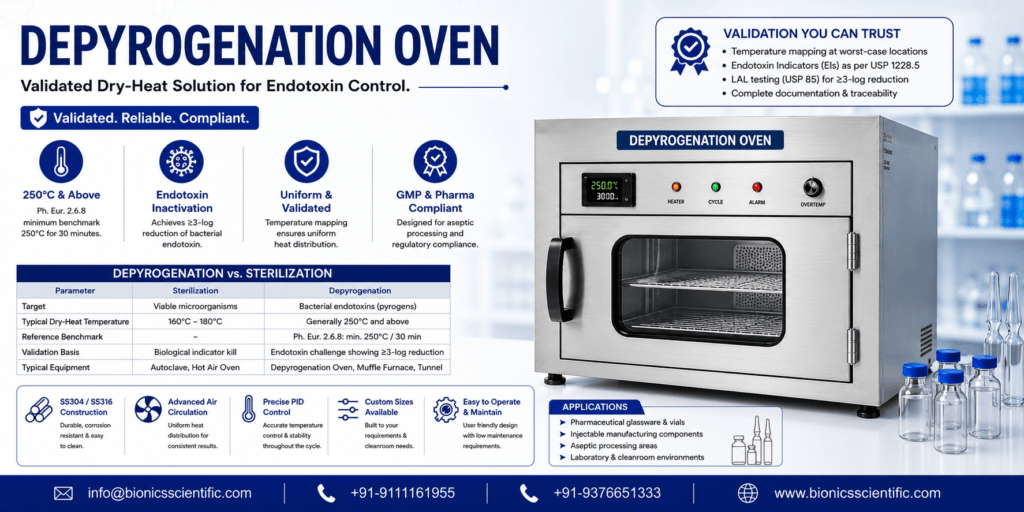
Pharmacopeial references (European Pharmacopeia 2.6.8) cite a minimum of 250°C for 30 minutes as a standard benchmark; industry sources report validated cycles anywhere from roughly 220°C to 350°C, with higher temperatures allowing shorter dwell times.
The exact time-temperature combination is never assumed—it is established through validation on the specific equipment and load. Depyrogenation must demonstrate at least a 3-log reduction of a bacterial endotoxin challenge.
Table of Contents
- What Is Depyrogenation?
- Depyrogenation vs. Sterilization
- Depyrogenation Oven vs. Standard Hot Air Oven
- How Depyrogenation Works
- How a Depyrogenation Cycle Is Validated
- Related High-Temperature Equipment
- Key Specifications to Evaluate
- Applications
- How to Choose the Right Depyrogenation Oven
- Maintenance & Best Practices
- Frequently Asked Questions
What is depyrogenation?
Depyrogenation removes heat-stable bacterial endotoxins from the cell walls of gram-negative bacteria on glassware, vials, and equipment used in sterile pharmaceutical manufacturing.
A depyrogenation oven is designed for validated high-temperature cycles that reduce bacterial endotoxins on suitable pharmaceutical glassware and equipment.
A container can be fully sterile—free of viable microorganisms—while still carrying enough residual endotoxin to trigger a pyrogenic (fever-inducing) reaction if it enters the bloodstream. That’s why depyrogenation is a mandatory, separately validated step ahead of aseptic filling, not an optional extension of sterilization.
Depyrogenation vs. Sterilization
| Parameter | Sterilization | Depyrogenation |
| Target | Viable microorganisms | Bacterial endotoxins (pyrogens) |
| Typical dry-heat temperature | 160°C–180°C | Generally 250°C and above (facility- and load-dependent) |
| Reference benchmark | — | Ph. Eur. 2.6.8: minimum 250°C / 30 min |
| Validation basis | Biological indicator kill | Endotoxin challenge demonstrating ≥3-log reduction |
| Typical equipment | Autoclave, hot air oven | Depyrogenation oven, muffle furnace, tunnel |
Because bacterial endotoxin is far more heat-resistant than viable microorganisms, a cycle that reliably sterilizes at 160–180°C will not meaningfully reduce endotoxin load—depyrogenation requires its own, separately validated parameters.
Depyrogenation Oven vs. Standard Hot Air Oven
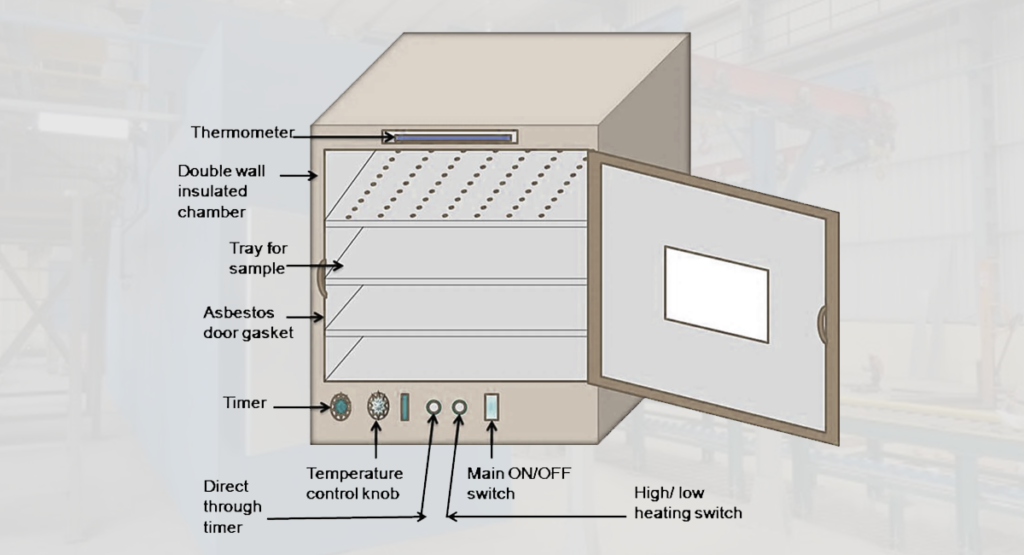
The two share the same basic technology—forced-air convection heating in an insulated chamber—but differ in engineering tolerance and intended validation.
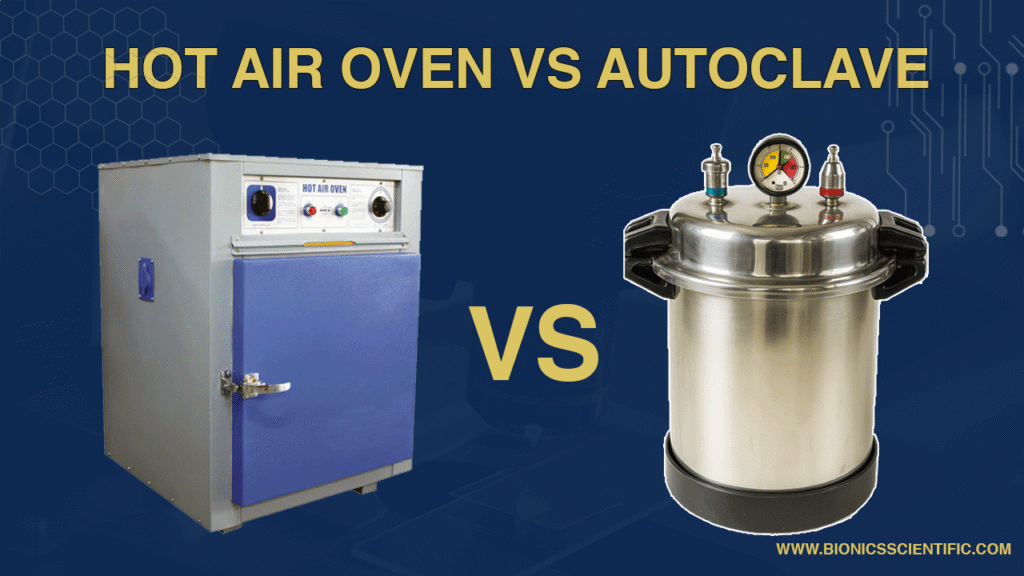
A standard hot air oven is typically rated and controlled for drying or sterilization work up to roughly 180–250°C, without the sustained high-temperature stability or documented uniformity data needed for a depyrogenation claim. A depyrogenation oven is built and validated specifically to hold 250°C or higher uniformly across a loaded chamber for the full dwell time, with the temperature-mapping and endotoxin-indicator data to prove it.
In short: not every hot air oven can be used for depyrogenation, but a depyrogenation oven can generally also perform standard drying and sterilization duties.
How Depyrogenation Works
- Loading—Pre-cleaned glassware/vials are loaded with adequate air gaps for uniform heat penetration.
- Ramp-up—The chamber heats to the validated set point for that facility’s process.
- Dwell—Temperature is held for the validated exposure time.
- Cooling — Controlled, filtered cooling before unloading to prevent recontamination.
- Qualification—The cycle is proven, not assumed, through the validation approach below.
How a Depyrogenation Cycle Is Actually Validated
Endotoxin testing by LAL (Limulus Amebocyte Lysate) assay is one piece of validation, not the whole picture. A complete qualification typically combines:
- Temperature mapping—Thermocouples are placed throughout the loaded chamber to identify cold spots (restricted-airflow zones, dense-load areas) rather than relying on a single sensor reading.
- Endotoxin indicators (EIs) — Carriers spiked with a known endotoxin concentration (per USP 1228.5, typically recoverable at 1,000 endotoxin units per carrier) are placed at the worst-case, coldest-mapped locations in the load.
- Log-reduction demonstration—The Bacterial Endotoxins Test (USP 85, the LAL assay) confirms at least a 3-log reduction in post-cycle recovery at the worst-case position, not just an average across the chamber.
- Repeat qualification runs—Consistency is demonstrated across multiple runs before the cycle is released for routine production, per USP 1228 Depyrogenation.
This combination of physical (temperature mapping) and biological (endotoxin indicator challenge) data—not a single LAL result—is what a depyrogenation cycle’s validation package should show.
Related High-Temperature Equipment
A muffle furnace also uses indirect heating, but for a different purpose—ashing, calcination, and high-temperature materials testing rather than endotoxin inactivation.
Its heating elements are embedded within or wound around the insulated chamber walls rather than exposed to the sample; heat reaches the material by radiation from the hot wall surfaces and convection of the air inside the sealed chamber, not by direct element contact—which keeps the sample free of combustion or contact contamination and allows temperatures well above a typical oven (often 1000°C+, model-dependent).
A sintering furnace uses a similar indirect-heating chamber but is purpose-built to fuse powder particles below their melting point for ceramics, metal powders, and similar applications. Both are related product lines to depyrogenation ovens but serve distinct processes—worth knowing if you’re sourcing high-temperature lab equipment, but not a substitute for a validated depyrogenation cycle.
Key Specifications to Evaluate
| Specification | Typical Detail |
| Temperature range | Up to 350°C (manufacturer-specified per model) |
| Uniformity | Confirmed via loaded-chamber temperature mapping—an empty-chamber datasheet figure doesn’t reflect real load conditions |
| Control | Microprocessor/PID with programmable ramp, hold, cool |
| Construction | SS316 chamber, SS304 outer body |
| Air circulation | Forced convection, HEPA-filtered intake (cleanroom models) |
| Documentation | IQ/OQ/PQ protocols, calibration certificates, endotoxin-indicator qualification support |
A note on HSN classification: For GST/customs purposes, laboratory hot air ovens commonly fall under HSN Chapter 8514 (sub-headings 85141900/85141000 are frequently used), but this is a procurement detail, not a technical specification—always confirm the applicable code with your CA or customs broker rather than a general reference.
Applications
- Pharmaceutical manufacturing—vial/ampoule/glassware depyrogenation before aseptic filling
- Biotech & research labs — glassware prep, ashing, sample analysis
- Hospitals & diagnostic labs—glassware and instrument preparation
How to Choose the Right Depyrogenation Oven
- Ask for the loaded-chamber temperature mapping report, not the empty-chamber spec—the datasheet figure means little until proven with your actual load.
- Confirm endotoxin-indicator qualification support—the vendor should be able to describe how worst-case positions were identified and challenged, not just quote a temperature.
- Match chamber size to batch volume—undersized chambers compromise airflow and uniformity.
- Check the control system—programmable ramp/hold/cool with data logging for batch records.
- Verify documentation and product-contact material—IQ/OQ/PQ protocols and SS316 construction should come standard, not as add-ons.
Looking for the Right Depyrogenation Oven?
Choose a depyrogenation oven based on your required temperature range, chamber capacity, temperature uniformity, and validation requirements. Explore our depyrogenation oven for product details and specifications.
Maintenance & Best Practices
Schedule periodic remapping and calibration to confirm uniformity stays within validated tolerance; inspect door gaskets regularly; keep a preventive maintenance log for heating elements and sensors; and revalidate the cycle after replacing any major component.
Bionics Scientific
Bionics Scientific has manufactured laboratory and pharmaceutical process equipment for 35 years, with 1900+ units dispatched pan-India and to the Middle East, Saudi Arabia, USA, and Oman. Our parent company, Kartal Projects Pvt Ltd, holds the following certifications, issued by Euroglobe Registrars (UK):
| Certification | Cert No. | Valid To | Scope |
| ISO 9001:2015 | 184876 | 30-03-2029 | Quality Management System |
| CE / MDD 93/42/EEC | 184877 | 30-03-2029 | See verification note below |
| GMP | 184878 | 30-03-2029 | Products per annexure |
| NSF/ANSI 61 | 183884 | 08-03-2027 | Bio-safety cabinets & laboratory equipment |
Note for internal review: These certifications apply at the Kartal Projects quality-system level; the specific product-scope annexure should be confirmed before citing them for a particular equipment line. The MDD 93/42/EEC directive was superseded by EU MDR 2017/745 in May 2021—this certificate’s current standing and applicable scope should be verified directly with Euroglobe Registrars before it’s used as a live marketing claim.
Every unit ships with IQ/OQ/PQ documentation to support your facility’s validation.
FAQs
What is depyrogenation?
A validated dry-heat process that destroys bacterial endotoxins on pharmaceutical glassware, going beyond sterilization.
What temperature is needed for depyrogenation?
Ph. Eur. 2.6.8 cites a minimum of 250°C for 30 minutes; actual validated cycles vary by facility and equipment, sometimes running higher for shorter dwell times.
Depyrogenation vs. sterilization—what’s the difference?
Sterilization kills microorganisms at 160–180°C; depyrogenation destroys heat-stable endotoxins, requiring a separately validated, higher-temperature cycle.
Depyrogenation oven vs. standard hot air oven—what’s the difference?
Same base technology, different validation: a depyrogenation oven is built and proven to hold uniform high heat with documented temperature mapping; a standard hot air oven typically isn’t rated or validated for that.
What is a muffle furnace used for?
High-temperature ashing, calcination, and materials testing are related but distinct product lines from depyrogenation ovens.
Muffle furnace vs. sintering furnace: What’s the difference?
Both use indirect heating; muffle furnaces handle ashing/calcination, and sintering furnaces fuse powder particles into solids.
How is a depyrogenation cycle validated?
Through temperature mapping to find cold spots, combined with endotoxin-indicator challenge testing (LAL assay) at those worst-case positions, repeated across multiple qualification runs.
What is the HSN code for a hot air oven?
Commonly, the HSN is 8514, with subheadings 85141900 or 85141000—confirm the exact code with your CA.
Is a “center fuse machine” the same as a muffle furnace?
It’s a common misheard/mistyped search term for “muffle furnace” or similar high-temp lab furnace equipment.
What certifications does Bionics Scientific hold?
ISO 9001:2015, CE/MDD 93/42/EEC, GMP, and NSF/ANSI 61 through parent company Kartal Projects Pvt. Ltd.—buyers should request the product-specific scope annexure to confirm coverage.
Get a Validated Depyrogenation Oven Built for Your Process
Need a depyrogenation oven sized and validated for your production line? Request a technical spec sheet and quote from Bionics Scientific’s engineering team — serving pan-India and the Middle East, Saudi Arabia, USA, and Oman. Contact / Request a Quote