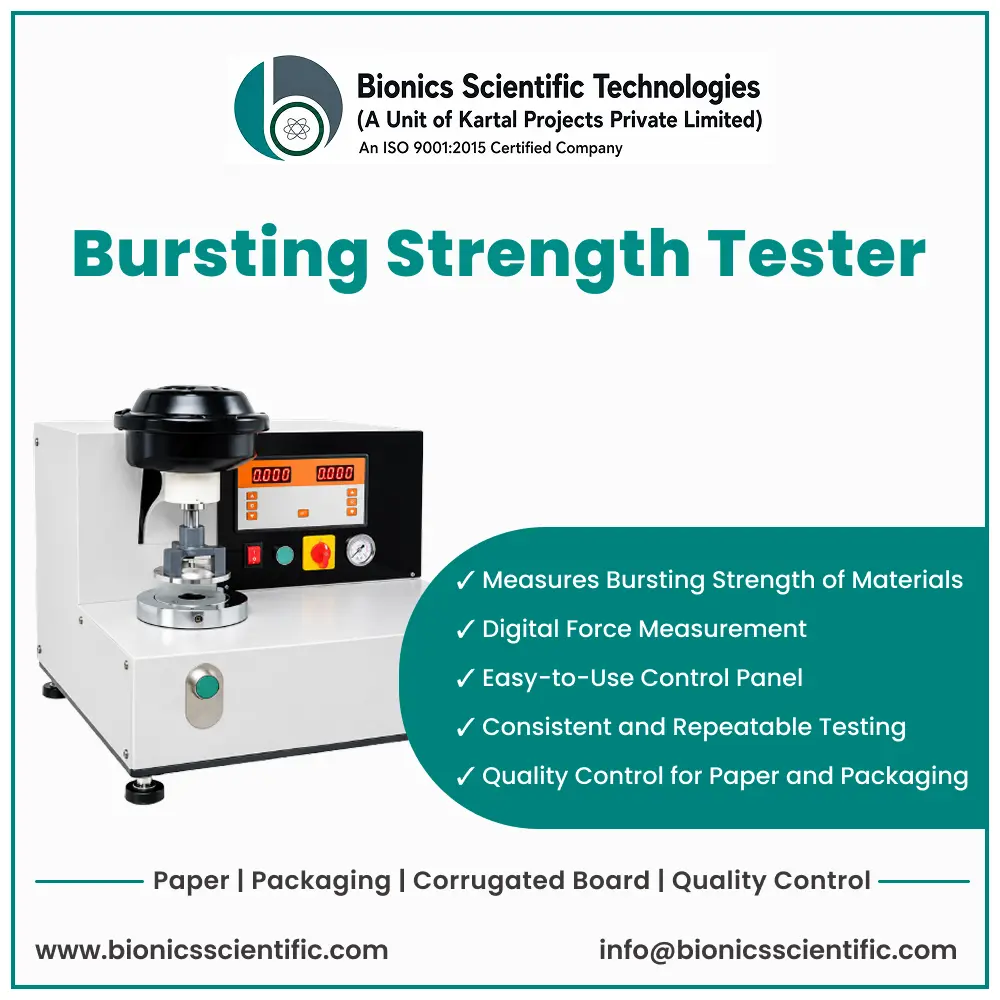
Bursting Strength Tester
Testing equipment for evaluating the bursting strength of paper, paperboard and suitable packaging materials.
Choose a configuration based on the material, applicable test method, required measurement range and reporting needs.
Bursting Strength Tester for Paper and Packaging Materials
Bionics Scientific Technologies offers laboratory and testing equipment for quality-control and material-testing applications. A bursting strength tester is used to determine the resistance of a sheet material to rupture when pressure is applied under specified test conditions. It is commonly considered for paper, paperboard, corrugated board and other materials where the relevant test method is applicable.
The appropriate instrument depends on the material being tested, the standard or internal method followed by the laboratory, the expected bursting-strength range, specimen dimensions and the required result display or data-recording features. Confirm the available model specifications, included accessories, applicable standards and calibration documentation with the supplier before ordering.
What Is a Bursting Strength Tester?
A bursting strength tester is a material-testing instrument that measures the pressure required to rupture a clamped test specimen. The result helps quality-control teams assess material strength and compare batches when specimens are prepared and tested using consistent, applicable procedures.
Working Principle of a Bursting Strength Tester
In a typical test, a specimen is securely clamped over a test opening. Pressure is applied to the specimen through the instrument’s pressure system until the material bursts. The instrument records the pressure at rupture, and the result is reported according to the selected test method. Test conditions, specimen preparation and calculation or reporting rules should follow the standard applicable to the material.
Applications of Bursting Strength Testing
- Paper and paperboard quality control
- Packaging material inspection and comparison
- Corrugated board testing, where the selected instrument and method are suitable
- Paper mills, packaging manufacturers and converting facilities
- Quality-control laboratories and material-testing departments
- Incoming-material checks and production batch evaluation
Key Factors When Selecting a Bursting Strength Tester
| Selection Factor | What to Confirm |
|---|---|
| Test material | Paper, paperboard, corrugated board or another material covered by the chosen method. |
| Test method | The applicable standard or documented internal procedure required by your laboratory. |
| Measurement range | The expected bursting-strength range of the samples to be tested. |
| Clamping and specimen setup | Compatibility with the specimen size, thickness and preparation method. |
| Display and reporting | Required units, result display, data export, printer or reporting options, if available. |
| Calibration and support | Calibration requirements, documentation, training and after-sales support. |
Why Use a Bursting Strength Tester in Quality Control?
Bursting strength results can help laboratories evaluate material consistency, investigate changes between production batches and support supplier or incoming-material checks. Results are most useful when specimens are conditioned and prepared consistently and the same applicable test method is followed. Bursting strength is only one material property; it should not be treated as a substitute for other tests required by a product specification.
What to Share for a Product Recommendation
- Material type and sample thickness or grammage, where relevant
- Expected bursting-strength range
- Required test standard or internal procedure
- Required units, result display and reporting features
- Calibration or documentation requirements
- Quantity, delivery location and any special laboratory requirements
Frequently Asked Questions
What does a bursting strength tester measure?
It measures the pressure required to rupture a clamped specimen under the conditions of the selected test method.
Which materials can be tested?
Depending on the instrument and method, common applications include paper and paperboard. Confirm suitability for corrugated board or any other material with the instrument specifications and applicable standard.
How is bursting strength testing performed?
A prepared specimen is clamped over the test opening, pressure is applied until rupture, and the instrument records the pressure at failure. The detailed procedure depends on the selected standard.
How do I choose the right bursting strength tester?
Start with the test material, applicable standard, expected measurement range, specimen setup, reporting needs and calibration requirements. Ask the supplier to confirm model suitability before purchase.
Does bursting strength testing replace other packaging tests?
No. It measures a specific property. Depending on the material and product specification, other tests may also be required.
Request Bursting Strength Tester Details and Quotation
Share your test material, applicable standard, expected measurement range and reporting requirements so the team can help identify a suitable configuration and provide current product details.
Email: info@bionicsscientific.com | Call: +91 9111161955 / +91 9376651333
Explore Related: Laboratory Testing Equipment