
Laboratory Incubators for Medical & Pharmaceutical Use
Laboratory Incubator Manufacturers and Suppliers in India
A laboratory incubator keeps cultures, cells and samples at a steady temperature, and in some models steady humidity and CO2, so that results stay repeatable from one batch to the next. Bionics Scientific Technologies (P) Ltd. is a Delhi-based, ISO certified laboratory incubator manufacturer with 26 years of manufacturing experience. We build and supply incubators for hospitals, microbiology and pharma labs, universities and research institutes across India, and export to Asia, the Middle East and Africa.
Quick answer: We manufacture five types of laboratory incubators: heated (general purpose), BOD, CO2, shaking and dry bath. Pick heated for simple warm incubation, BOD when you need cooling as well, CO2 for mammalian cell culture, shaking for aerated liquid cultures, and dry bath for small tubes and vials.


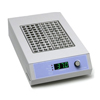
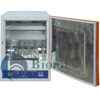
Which Laboratory Incubator Is Right for Your Work?
Most buying mistakes happen because the incubator type does not match the job. The table below shows what each type does best. The ranges are typical for this class of equipment, so please confirm the exact figures for your chosen model before ordering.
| Incubator type | Typical working range | Best suited for |
|---|---|---|
| Heated (general purpose) | A few degrees above ambient up to about 60 to 70°C | Routine bacterial culture, sample warming, hospital and teaching labs |
| BOD incubator | Below ambient up to about 50 to 60°C (heating and cooling) | BOD testing, seed germination, insect and microbial studies, stability work |
| CO2 incubator | Around 37°C with 5% CO2 and high humidity | Mammalian cell and tissue culture, IVF and research labs |
| Shaking incubator | Temperature control with orbital or reciprocating motion | Aerated liquid cultures, fermentation trials, enzyme studies |
| Dry bath incubator | Block heating, often from near ambient to over 100°C | Small tubes and vials, molecular biology, quick sample incubation |
How a Laboratory Incubator Works
Every incubator does the same basic job: it measures the chamber temperature, compares it with your setpoint and corrects the difference. In our units a PID controller adjusts the heater output smoothly instead of switching it fully on and off, which is why the temperature stays steady. Air-jacketed chambers respond quickly, while water-jacketed chambers hold the temperature longer during a power cut or a door opening.
CO2 models add a gas sensor and a humidity system. The sensor reads the gas level inside the chamber and the controller opens a valve to top it up, so the pH of the culture medium stays stable. Modern units use infrared sensing for this because it responds faster than older thermal conductivity sensors.
Why Labs Choose Bionics Scientific Incubators
We have been manufacturing laboratory equipment for 26 years, and every incubator goes through a double quality check before it leaves our factory in Delhi. We are an ISO certified company, and our build process follows the quality management approach described in ISO 9001. Our customers tell us the same few things matter most: a stable temperature, a clean chamber and a team that picks up the phone when something needs service. The comparison below shows how our incubators are built against a typical entry level unit.
| Feature | Our laboratory incubators | Typical lab incubators |
|---|---|---|
| Temperature accuracy | ±0.1°C precision with even distribution across the chamber | ±1°C fluctuation, uneven heating zones |
| Heating system | PID controlled air-jacket or water-jacket system | Basic on/off thermostatic heating |
| Humidity control (CO2 models) | Automatic humidity with overflow protection | Manual water trays, inconsistent humidity |
| CO2 control | Non-dispersive infrared sensors with fast response | Slower thermal conductivity sensors |
| Contamination prevention | HEPA filters, UV sterilization and seamless corners | Standard build, prone to microbial contamination |
| Build quality | Stainless steel inner chamber, corrosion resistant body | Mild steel or powder coated interior that can rust |
| User interface | Touchscreen or LED digital controller with alarm | Analog dials or basic push buttons |
| Safety features | Over-temperature protection, door open alert, data logs | Basic thermal cut-off, no monitoring or logging |
| Custom models | BOD, CO2, hybrid models and many chamber sizes | Limited models, fixed sizes |
| After-sales support | 1 year onsite warranty and a service network across India | Minimal support, slower response |
Our Quality Certifications
Our quality system and products are independently assessed and certified by Euroglobe Registrars, London. The table lists each certificate with its number and validity, so your purchase or audit team can check it.
| Certificate | Standard | Scope | Certificate No. | Issued | Valid until |
|---|---|---|---|---|---|
| Quality management | ISO 9001:2015 | Manufacture and supply of laboratory and scientific equipment, including incubators (products as per annexure) | 184876 | 31 March 2026 | 30 March 2029 |
| CE compliance | Directive MDD 93/42/EEC | Technical file assessed for the products listed in the annexure | 184877 | 31 March 2026 | 30 March 2029 |
| Good Manufacturing Practices | GMP | Laboratory and scientific equipment, including incubators (products as per annexure) | 184878 | 31 March 2026 | 30 March 2029 |
| NSF compliance | NSF/ANSI 61 | Manufacture and supply of bio-safety cabinets, laboratory equipment and scientific equipment | 183884 | 9 March 2024 | 8 March 2027 |
These certificates are issued in the name of Kartal Projects Private Limited, Delhi. Each one can be verified with the issuing body using the QR code printed on the certificate, and we are happy to share copies on request.
How to Choose the Right Incubator
Before you ask for a quotation, run through these points. They are the same questions our engineers ask on the first call.
- Temperature range: Check whether you only need heat or also cooling. If your room is often warmer than your target, you need a BOD model.
- Capacity: Count your racks, plates or flasks and add some room for air to move. A packed chamber heats unevenly.
- Gas and humidity: Cell culture usually needs 5% CO2 and high humidity. Microbiology rarely does.
- Chamber material: Stainless steel is easier to clean and lasts longer, especially with frequent disinfection.
- Monitoring: If you work under audit, ask for alarms, door alerts and data logging.
- Service: Confirm warranty terms and how fast a service engineer can reach your site.
Using and Maintaining Your Incubator
A well built incubator still needs basic care. These habits keep temperature stable and cultures clean for years:
- Place the unit on a level surface, away from direct sunlight, damp corners and heat sources, with a gap around it for ventilation.
- Open the door only when you need to. Every opening drops the temperature and, in CO2 models, the gas level.
- Check temperature, CO2 and humidity readings regularly against a calibrated reference.
- Clean the shelves, humidity pan and chamber walls on a fixed schedule with a lab-approved disinfectant.
- Keep the water pan topped up with distilled water so the humidity system does not scale.
Custom Incubators and Supply Across India and Overseas
Many labs need something slightly different from a catalogue model. We regularly build incubators to custom specifications, and we can also supply accessories such as extra shelves, trays and racks. To start, send us the inner chamber size, shelf count, chamber material and handle type. We deliver across India and export to Asian, Middle Eastern and African markets, with documentation and packing suited to overseas shipping.
Looking for a Laboratory Incubator Quotation?
Tell us the type, capacity and temperature range you need. Our team will reply with the right model and a price.
Contact UsLaboratory Incubator FAQs
What is a laboratory incubator?
It is a closed chamber that holds a steady temperature, and in some models humidity and CO2, so cultures, cells and samples can grow or react under repeatable conditions.
Which incubators do you manufacture?
We make heated (general purpose), BOD, CO2, shaking and dry bath incubators.
BOD incubator or heated incubator, which one do I need?
Choose a heated incubator if you only run above room temperature. Choose a BOD incubator if you also need cooling, for example 20 to 25°C in a warm room.
How accurate is the temperature control?
Our PID controlled models hold the setpoint to about ±0.1°C at the sensor. Uniformity across shelves depends on the model, load and shelf count.
What affects laboratory incubator price?
Chamber volume, incubator type, temperature range, control panel, shelf count and extras such as alarms or data logging.
Can you make a custom size?
Yes. Share the chamber size, shelf count, material and handle type, and we will build to that specification.
Do you export incubators?
Yes. We supply across India and to labs in Asia, the Middle East and Africa.
How do I get a quotation?
Send the incubator type, capacity, temperature range and your location through the contact form. We will reply with a quotation and technical details.