- What is an autoclave?
- Autoclave Working Principle
- Manual vs. Automatic Autoclaves: A Quick Comparison
- Key Features to Consider When Choosing an Autoclave
- How to Use an Autoclave
- Typical Autoclave Sterilization Parameters
- Pre-Operation Checklist
- Step-by-Step Guide to Using an Autoclave
- Applications and Limits of Steam Sterilization
- Maintenance and Best Practices
- Autoclave Machine Diagram and Main Components
- Anatomy of an Autoclave: Key Components
- Horizontal vs. Vertical Autoclave: Which Diagram Fits Your Lab?
- The Role of an Autoclave Diagram in Microbiology
- Autoclave Price in India: What a Quotation Should Include
- Buying Checklist for a Laboratory Autoclave
- How Steam Transfers Heat
- Validation of the Sterilization Cycle
- Frequently Asked Questions (FAQs)
- Conclusion
- Need the Right Autoclave for Your Application?
What is an autoclave?
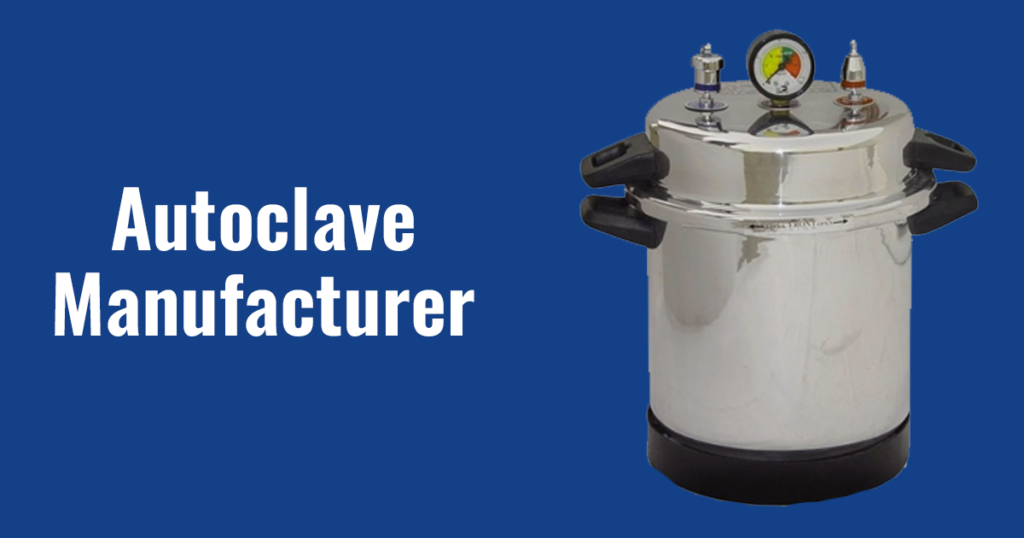
An autoclave is a steam sterilizer that is used in laboratories, hospitals, and industries for sterilizing compatible materials through steam under pressure. The autoclave follows the method of moist heat sterilization, in which heat transfer occurs via steam to destroy the microorganisms.
Knowledge of autoclave principle and workings enables a user to choose the appropriate sterilization cycle and correctly prepare materials and run the equipment. This tutorial explains the autoclave working, labeled diagram, key components, sterilization cycle steps, types, uses, and price in India.
Autoclave Working Principle
An autoclave works on the principle of moist-heat sterilization using saturated steam under pressure. Steam condenses on cooler load surfaces and releases heat. Pressure allows saturated steam to reach temperatures above the normal boiling point of water; pressure alone does not sterilize the load. Effective processing depends on the appropriate temperature, exposure time, and heat transfer throughout the load. The operating conditions must match the equipment, load, and validated sterilization cycle.
How Does the Sterilization Process Work?
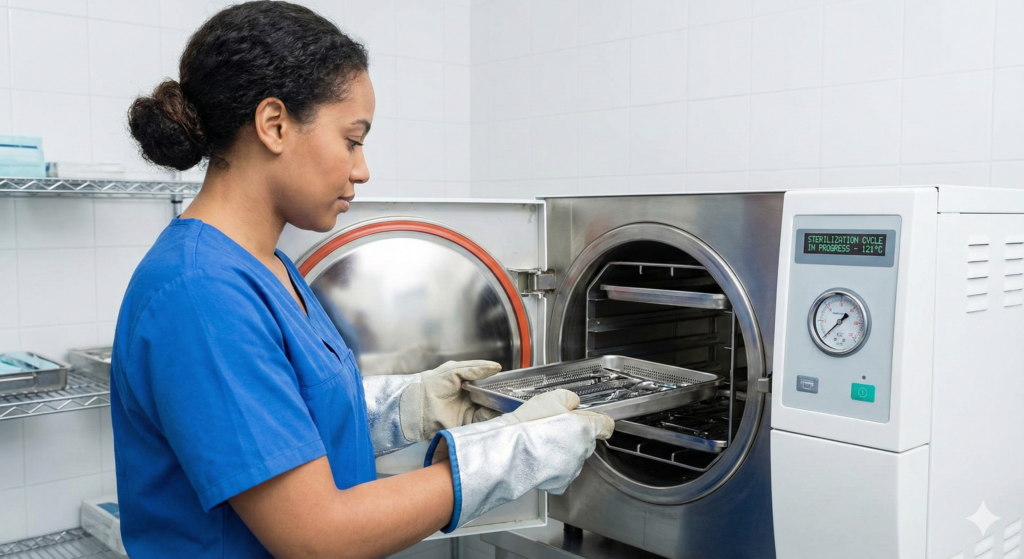
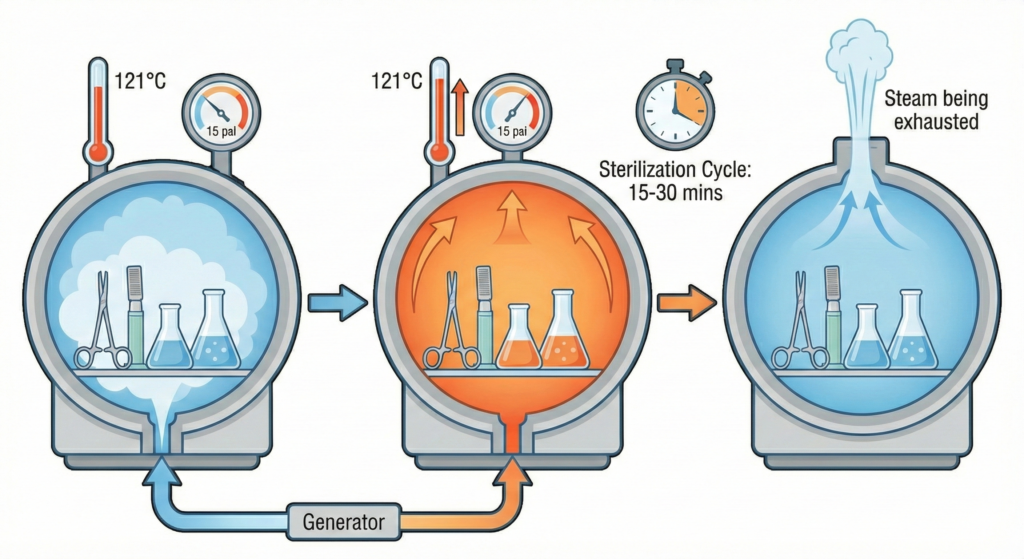
An autoclave sterilizes materials using saturated steam under pressure. Pressure allows steam to reach temperatures above the normal boiling point of water, while direct steam contact transfers heat efficiently to the load.
Sterilization cycle phases
A steam sterilization cycle generally includes the following stages:
- Conditioning: Air is removed or displaced, and the load is heated according to the selected cycle.
- Exposure: The required sterilization conditions are maintained for the validated exposure period.
- Exhaust and recovery: Pressure is reduced according to the selected cycle. Compatible solid loads may undergo drying; liquid loads require controlled exhaust and adequate cooling.
Exposure time is only one part of the total cycle time. The appropriate cycle depends on the equipment, load, and validated procedure.
Manual vs. Automatic Autoclaves: A Quick Comparison
Choosing the right type of equipment depends on your specific needs and how often you plan to use it.
| Feature | Manual Autoclave | Automatic Autoclave |
| Operation | Requires manual control of valves and timers. | One-touch operation with digital cycles. |
| Precision | Relies on the operator’s expertise. | High precision with automated sensors. |
| Maintenance | Simpler mechanics, but needs closer monitoring. | Self-diagnostic features for easier care. |
| Ideal Use | Small labs with basic sterilization needs. | Busy hospitals and high-volume labs. |
Key Features to Consider When Choosing an Autoclave
Before selecting an autoclave, consider the chamber capacity, construction material, operating pressure, level of automation, safety features, validation requirements, and after-sales support.
• Chamber Capacity: Select a size suitable for your typical load without overcrowding.
• Chamber Material: Choose corrosion-resistant construction suitable for repeated steam cycles.
• Controls and Automation: Decide whether manual controls or automated cycles better suit your workload.
• Safety Features: Look for suitable pressure controls, safety valves, and door-locking mechanisms.
• Validation and Calibration: Consider how the unit will be monitored and validated for your application.
• Service Support: Check the availability of technical support, spare parts, and maintenance.
How to Use an Autoclave
Safe autoclave operation depends on correct loading, cycle selection, steam exposure, and controlled depressurization. Always follow the operating instructions for the specific autoclave model and the requirements of your sterilization process.
Typical Autoclave Sterilization Parameters
There is no single temperature and time setting suitable for every autoclave load. Exposure conditions depend on the sterilizer, materials, packaging, load arrangement, and validated process. The examples below are CDC reference conditions for specified wrapped healthcare loads; they are not operating settings for laboratory media or waste.
Autoclave Cycle Reference Table
|
Sterilizer Type |
Example Load |
Temperature |
Exposure Time |
|
Gravity displacement |
Wrapped instruments |
121°C |
30 minutes |
|
Dynamic-air-removal, such as pre-vacuum |
Wrapped instruments |
132°C |
4 minutes |
CDC steam sterilization guidance. These reference exposure periods apply to the specified wrapped healthcare loads and exclude conditioning, drying, and cooling. They are not universal settings for laboratory media or waste. Follow the applicable sterilizer and item instructions and the validated facility procedure.
Pre-Operation Checklist
A successful sterilization cycle starts before you even turn on the equipment. Follow these safety and maintenance steps.
- Check the drain: Ensure the drain strainer in the bottom of the autoclave sterilizer chamber is clean. If it is clogged, steam circulation will stop, and your items will be unsterile.
- Water level: Check the base chamber and the required water level and water quality according to the autoclave manufacturer’s operating instructions.
- Inspect your load: Ensure all items are compatible with autoclave sterilization. Never place volatile chemicals or heat-sensitive plastics inside the chamber.
- Prepare safety gear: Always have heat-resistant gloves nearby. Steam burns are a serious risk when operating an autoclave machine for hospital or lab use.
Step-by-Step Guide to Using an Autoclave
Now that you are prepared, follow these steps to use autoclave machine systems effectively.
Step 1—Preparation
Ensure the power is connected. Open the chamber door and verify that the drain is clear of debris. Add water according to the level and quality specified in the equipment manufacturer’s instructions.
Step 2—Loading the Items
Place your instruments or glassware into the sterilizer chamber. Do not crowd the items; steam must be able to touch every surface of every object.
- Expert Tip—Use autoclave tape indicator strips on the outside of your packages. Chemical indicator tape or strips can provide a visual indication that the package has been exposed to specified process conditions, but they should not be treated as proof of successful sterilization.
Step 3—Sealing and Starting
Close the door and lock it securely. Check the settings on the control panel. Once the chamber is securely closed, select the appropriate sterilization cycle according to the equipment instructions and load requirements.
Step 4 – Sterilization phase
Run the cycle specified for the load and sterilizer. Confirm that the recorded temperature, pressure, and exposure period meet the approved process requirements. For liquid loads, the liquid temperature may lag behind the chamber temperature; use the validated method for determining when exposure begins. Do not substitute a generic 20-minute hold for a validated cycle.
Step 5 – Exhaust and cooling
Allow the selected exhaust and cooling stages to finish. Liquid loads require a suitable liquid cycle with controlled pressure reduction to reduce boil-over risk. Wait until the equipment permits opening and the facility’s unloading criteria are met. A zero-pressure reading alone does not show that liquids are safe to handle.
Step 6 – Unloading
Follow the model-specific door-opening procedure and use the required protective equipment. Allow the load to cool as specified. For wrapped healthcare items, check package dryness, integrity and monitoring results before release. Follow the facility procedure for wet or damaged packs.
Applications and Limits of Steam Sterilization
Steam sterilization is widely used for compatible heat- and moisture-resistant instruments, laboratory materials, and specified waste loads. Reusable healthcare devices require appropriate cleaning and preparation before sterilization.
Successful processing depends on the correct equipment, load preparation, validated cycle, and monitoring. Completing a cycle alone does not guarantee that every item is sterile.
Maintenance and Best Practices
To keep your autoclave machine running at peak performance, follow these maintenance tips.
Follow the manufacturer’s cleaning, inspection, servicing and calibration schedule, together with the facility’s monitoring procedure. Check seals, drains and recorded cycle results as specified. Have qualified personnel investigate steam leakage or abnormal operation.
A positive biological indicator result requires investigation under the facility’s failure procedure. Possible causes include processing errors, equipment problems and test handling. Follow the approved procedure for holding affected loads, repeat testing and corrective action.
Autoclave Machine Diagram and Main Components
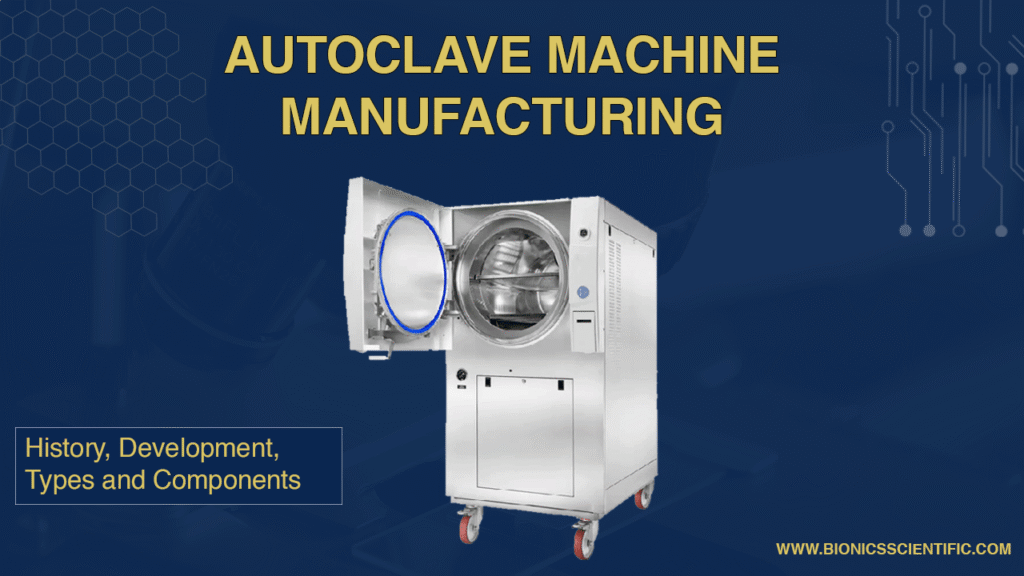
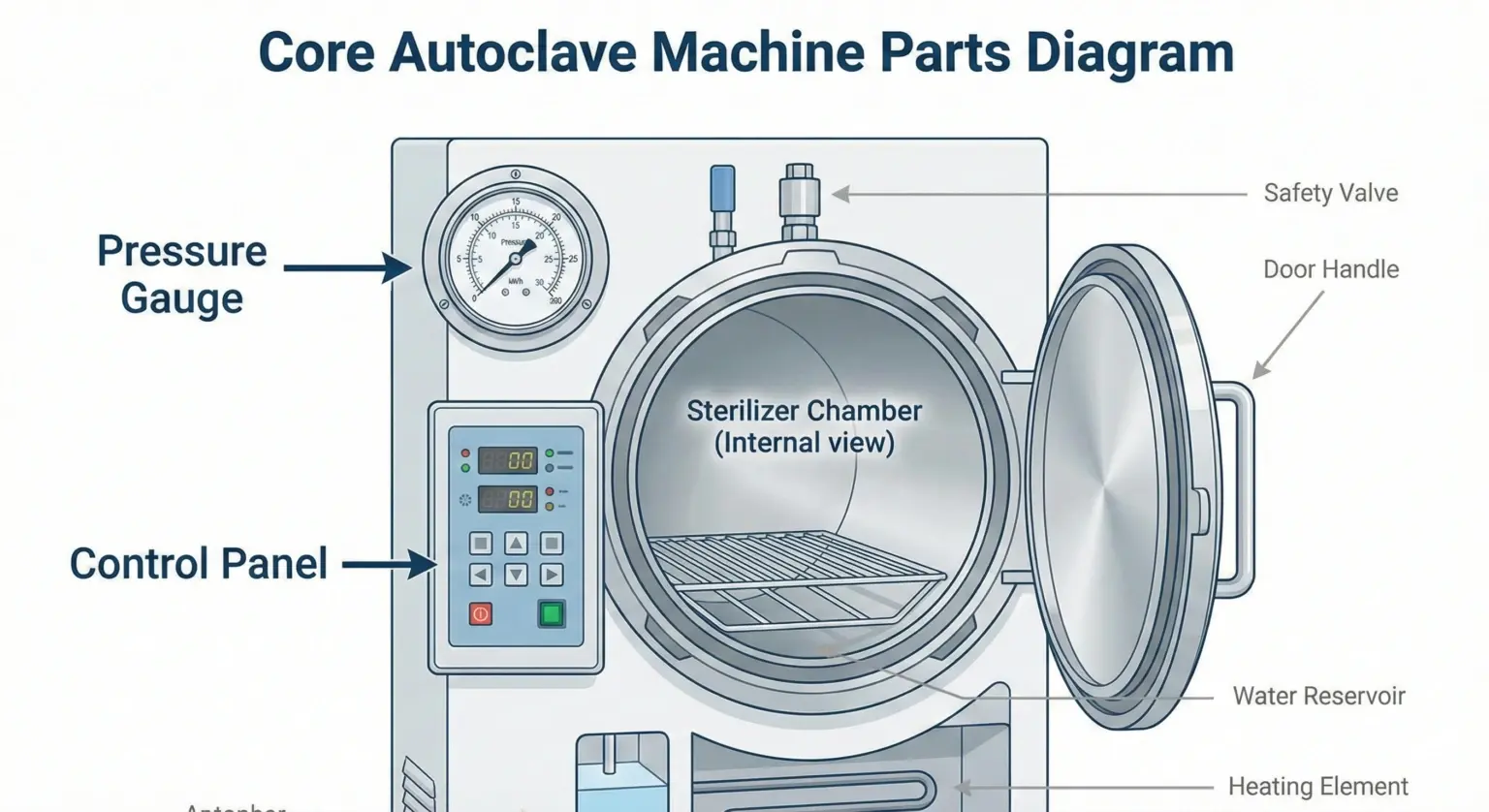
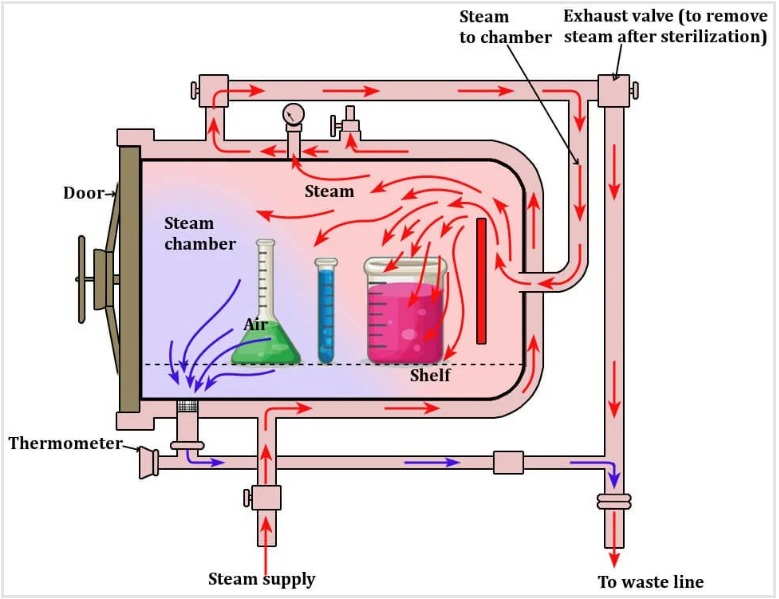
An autoclave diagram helps identify the components responsible for steam generation, pressure control, sealing, air removal, and safe operation. The exact design varies by autoclave type, but the following components are commonly found in steam sterilization systems.
Anatomy of an Autoclave: Key Components
To truly understand a schematic diagram of autoclaves, you need to know the role each part plays. A high-quality autoclave diagram with a label typically highlights several critical components that work in harmony to create a pressurized, high-heat environment.
1. The Pressure Vessel and Outer Jacket
The heart of any autoclave machine diagram is the pressure vessel. This is the inner chamber where you place your laboratory media or surgical tools. Most modern units also feature a jacketed chamber, an outer layer that surrounds the inner vessel to help maintain consistent temperatures and reduce condensation.
2. Steam Generator (The Boiler)
Often referred to as the powerhouse of the unit, the steam generator heats water to produce saturated steam. This steam is what actually performs the sterilization.
3. Safety Valve and Pressure Gauge
Safety is paramount when dealing withs high pressure steam. Every autoclave diagram with enough labels for a beginner will always feature a safety valve. This component acts as a fail-safe, releasing excess pressure if it exceeds the chamber’s limits. The pressure gauge allows the operator to monitor the internal environment in real time.
4. Gasket Seal
The gasket seal is a heavy-duty rubber or silicone ring that ensures the door remains airtight. Even a tiny leak in the gasket can prevent the machine from reaching the necessary pressure, rendering the sterilization cycle ineffective.
5. Thermostatic Trap
This is a specialized valve thats allows air and cooled water (condensate) to exit the chamber while trapping the HOT steam inside. Efficient air displacement is key to preventing cold spots inside the machine.
Horizontal vs. Vertical Autoclave: Which Diagram Fits Your Lab?
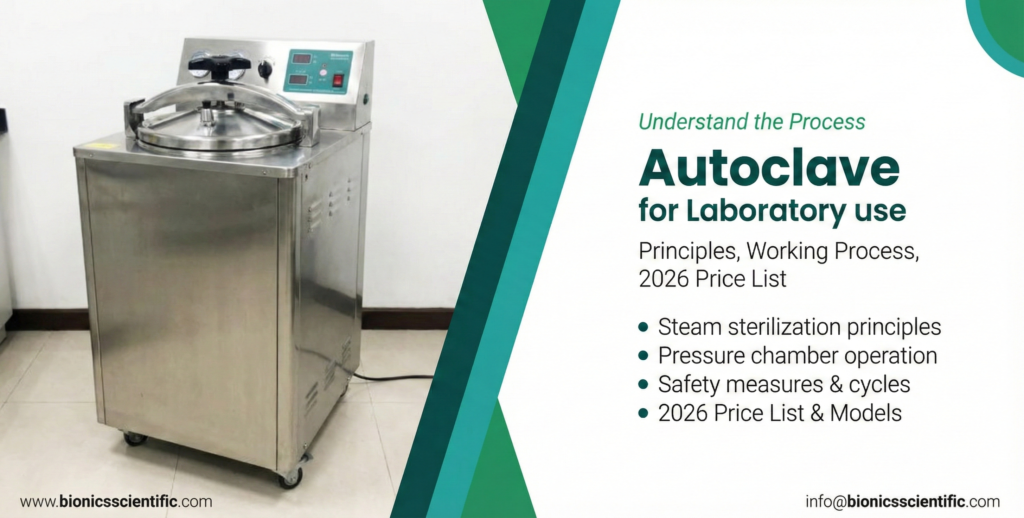
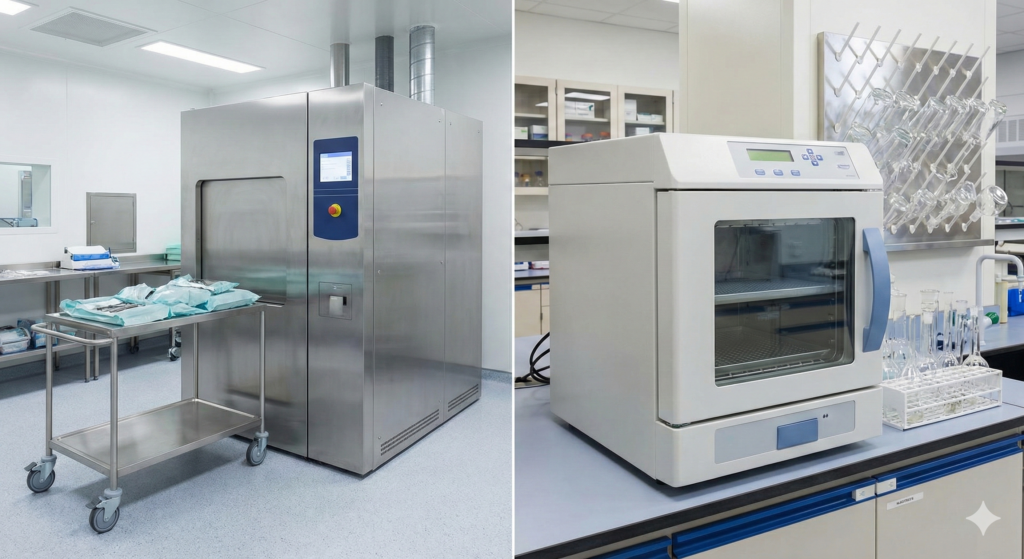
When choosing a sterilizer, you will likely encounter two main structural designs. Both follow similar scientific principles but differ in how they are loaded and where they fit in your workspace.
Comparison Table: Vertical vs. Horizontal Structures
| Feature | Vertical Autoclave | Horizontal Autoclave |
| Loading Style | Top-loading (items stacked) | Front-loading (items on shelves) |
| Space Efficiency | Compact; ideal for small labs | Requires more floor space |
| Capacity | Limited by vertical stacking | High capacity for bulky loads |
| Best Used For | Microbiology media, small flasks | Hospitals, large-scale industrial use |
| Structure | See vertical autoclave diagram. | See horizontal autoclave diagram. |
The Role of an Autoclave Diagram in Microbiology
In a biological setting, the autoclave diagram in microbiology is slightly more specialized. It often emphasizes the sterilization of biohazardous waste and laboratory media Microbiologists use the machine to hit the thermal death time of resilient organisms like Geobacillus stearothermophilus (the standard biological indicator).
Using an autoclave diagram with label as a reference, students can learn how to avoid common pitfalls such as trapping air in bottles or failing to reach the holding time required for total decontamination.
Autoclave Price in India: What a Quotation Should Include
Confirm operator training, load compatibility and the approved cycle. Check water or steam supplies, drain/strainer condition, seals and visible equipment faults according to the model instructions. Prepare the required protective equipment and monitoring materials. Do not operate the equipment with unresolved faults.
Buying Checklist for a Laboratory Autoclave
Before requesting a quotation, confirm:
- Load requirements: Materials to be processed and the cycles suitable for them.
- Usable capacity: Chamber dimensions, largest containers or packs, and daily throughput.
- Installation needs: Electrical supply, water or steam supply, drainage, and available space.
- Controls and safety: Available sensors, alarms, door interlocks, and cycle-recording options.
- Documentation: Model-specific conformity documents and required qualification support.
- Total cost: Installation, accessories, applicable taxes, warranty, maintenance, and service availability.
For small steam sterilizers offered with Class N, S, or B cycles, verify the manufacturer’s documented load scope and applicable standard. These labels do not apply to every laboratory autoclave.
How Steam Transfers Heat
Saturated steam condenses on cooler surfaces and releases latent heat, helping heat compatible loads efficiently. Moist heat damages essential microbial proteins and structures. Microbial inactivation depends on exposure conditions and load characteristics; it is not instantaneous.
Validation of the Sterilization Cycle
Review physical records, chemical indicators, and biological indicators according to the approved facility procedure. Routine monitoring checks individual cycles; validation establishes that a defined process consistently achieves its required outcome for specified loads.
|
Monitoring Type |
What It Shows |
|
Physical monitoring |
Records time, temperature, pressure, and cycle status to identify deviations. |
|
Chemical indicators |
Respond to specified process conditions. A color change alone does not prove sterility. |
|
Biological indicators |
Assess microbial inactivation using an appropriate resistant-spore challenge. Interpret results with controls and other monitoring evidence. |
Safety First
Steam sterilization involves high temperature and pressure, so operators should follow the equipment manufacturer’s safety instructions and facility procedures.
Frequently Asked Questions (FAQs)
What is an autoclave?
An autoclave is a sterilization device that uses high-pressure saturated steam to eliminate microorganisms from laboratory, medical, and industrial equipment.
Principle and working of autoclave?
An autoclave sterilizes laboratory and medical materials by using hot steam under pressure. The steam is at a high temperature and comes into contact with the items in the chamber and transfers heat which kills the harmful micro-organisms. The process of sterilization works through the combination of steam, temperature and time, as long as the proper cycle is used for the materials being treated.
What temperature is commonly used during sterilization?
Most cycles operate at 121°C or 134°C depending on the load and sterilization requirements.
What materials can be sterilized?
Only process materials compatible with the specified cycle and their manufacturer’s instructions. Load preparation and container suitability also matter.
What is the difference between vertical and horizontal models?
Vertical units typically load from the top, while horizontal units load from the front. Select equipment according to load dimensions, handling requirements, supported cycles and installation space.
How long does a typical cycle take?
Total cycle time includes conditioning, exposure and exhaust, plus drying or cooling where applicable. It varies with the load and selected cycle. The exposure period alone is not the total cycle duration.
What is the average price of an autoclave in India?
The price depends on capacity, chamber size, automation level, and application requirements, ranging from small laboratory units to large hospital-grade systems.
Conclusion
Autoclaves provide reliable steam sterilization when the correct equipment, load preparation, and validated operating cycle are used. When selecting an autoclave, consider the required capacity, chamber design, automation level, application, validation needs, and long-term service support.
Understanding these factors can help laboratories, medical facilities, and industrial users select equipment suited to their sterilization requirements.
Need the Right Autoclave for Your Application?
Contact Bionics Scientific Technologies for product recommendations, technical specifications, and the latest pricing information about our Autoclave sterilizers