How an ILR Works
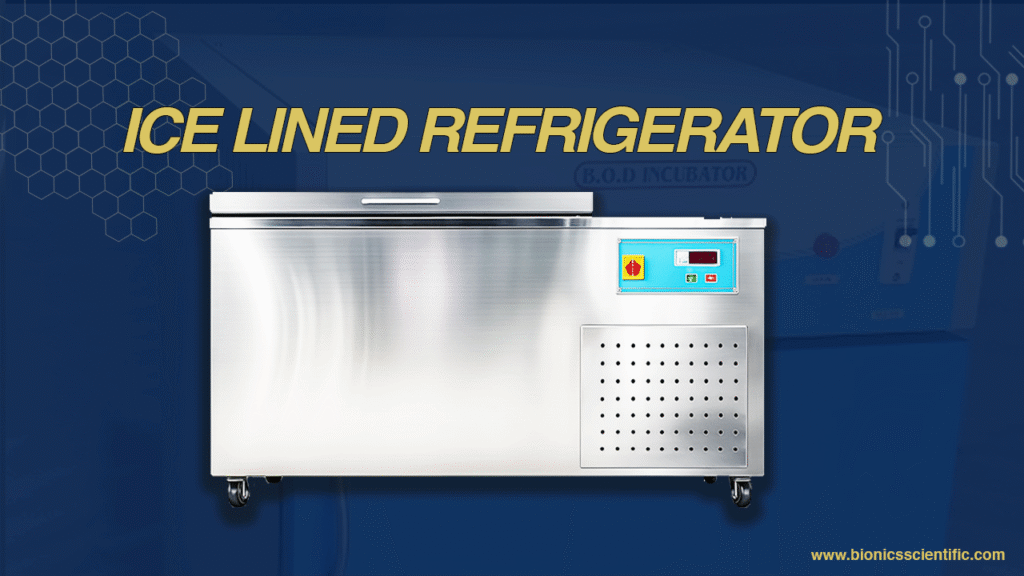
Ice Lined Refrigerator (ILR) is one form of cold chain equipment which is designed for storing vaccines and other medical commodities that need to be kept within the range of +2°C to +8°C. The unique feature of ILR as opposed to a conventional refrigerator is its design of being lined with ice which are containers of water inside the fridge walls
Here’s how the full cycle plays out:
-
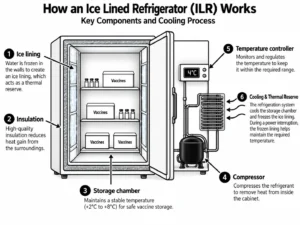
Cooling mode: If there is power to run it, the compressor functions as usual and freezes the water in the lining of the walls.
-
Thermal inertia mode: Once there is no electricity anymore, the freezing lining acts as a thermal capacitor, meaning that it accumulates heat and slowly releases cold energy, thus keeping the cabinet cool without using a compressor.
-
Design characteristics: ILRs have chest design in most cases, meaning that you can open them from the top side and not from the front one. As cold air is heavier than hot one, it settles in the lower part of the device and remains there even if the top is opened, hence the absence of temperature fluctuations which are typical for upright refrigerators.
-
Off-grid options: For the areas where electricity is not reliable enough, there are solar and battery powered versions of ILR which just use the same principle but get their recharge from solar panels.
An Ice-Lined Refrigerator (ILR) is a cold storage device designed to store vaccines and medical supplies which requires a temperature between +2°C and +8°C. It contains ice packs or ice linings along its internal walls. These linings help maintain temperature for extended periods during power outages.
Ice-lined refrigerators (ILRs) offer temperature stability and better insulation. The World Health Organization (WHO) has recommended several Ice Line Refrigerators models, making them suitable for use in immunisation programmes like BCG, OPV, DPT, Hepatitis B, and COVID-19 vaccines.
WHO Guidelines for Ice-Lined Refrigerators
WHO’s Performance, Quality and Safety (PQS) system provides specifications and evaluation guidance for cold-chain equipment used in immunization programmes. Requirements and performance characteristics can vary according to the equipment category and individual model.
For an ice lined refrigerator, important considerations include maintaining the required vaccine storage temperature, temperature monitoring, protection against freezing, holdover performance during power interruptions and suitable insulation.
Holdover time should be checked for the specific ILR model because it can vary according to equipment design, ambient conditions and tested configuration.
Important ILR Selection Parameters
|
Feature |
What to Check |
|
Temperature Range |
Required operating range for the intended vaccine-storage application |
|
Holdover Performance |
Check the tested holdover performance of the specific ILR model. |
|
Freeze Protection |
Features designed to reduce the risk of vaccine exposure to freezing temperatures |
|
Temperature Monitoring |
Display, recording, and alarm options according to the selected model |
|
Insulation |
Insulation type and thermal performance according to model specifications |
|
PQS Status |
Verify the specific model in the WHO PQS catalogue when PQS-qualified equipment is required |
Uses of ILRs in Healthcare and Immunization
- Vaccination Centers: Used for controlled storage of vaccines within the required temperature range.
- Healthcare Facilities: Used in clinics, hospitals, and public-health facilities involved in vaccine storage and immunization programs.
- Immunization Programmes: Suitable for vaccine cold-chain applications where controlled refrigerated storage is required.
- Remote Healthcare Facilities: ILR configurations with suitable power backup or energy options can support vaccine storage in locations with unreliable electricity.
Explore our complete range of laboratory refrigerators designed for medical and research applications.
ILR vs Normal Refrigerator
|
Feature |
ILR |
Domestic Refrigerator |
|
Primary use |
Vaccine/medical storage |
Household food storage |
|
Typical vaccine range |
+2°C to +8°C |
Not designed specifically for vaccines |
|
Temperature stability |
High |
Lower |
|
Power-outage protection |
Ice-lined thermal reserve |
Limited |
|
Healthcare application |
Yes |
No |
WHO PQS and Ice-Lined Refrigerators
The World Health Organization (WHO) Performance, Quality and Safety (PQS) system assesses products and devices intended for immunization programs. PQS requirements and evaluation criteria depend on the specific equipment category and model.
When PQS-qualified equipment is required for a project or procurement, buyers should verify the specific manufacturer, model, and current qualification status using the official WHO PQS catalogue. Product-specific information such as tested temperature performance, holdover characteristics, and operating conditions should also be checked for the selected model.
Bionics Scientific manufactures ice-lined refrigerators for vaccine storage and cold-chain applications, with configurations available according to capacity, monitoring, and project requirements. Documentation and certification requirements should be confirmed for the specific model before procurement.
Key Features of Ice-Lined Refrigerators
Here are the main features to look for in ILRs:
|
Parameter |
Requirement |
|
Temperature Range |
+2°C to +8°C |
|
Holdover Time |
20–70 hours during power failure |
|
Anti-Freeze Protection |
Prevents vaccines from freezing below 0°C |
|
Insulation |
CFC-free, environment-friendly |
|
Certification Body |
WHO PQS |
Uses of Ice-Lined Refrigerators
- Vaccine Storage: Used for controlled refrigerated storage of vaccines according to the applicable storage requirements.
- Immunization Programmes: Used as part of the vaccine cold chain in immunization and public-health programmes.
- Healthcare Facilities: Used in vaccination centers, clinics, and hospitals that require dedicated vaccine-storage equipment.
- Remote Healthcare Locations: Suitable ILR configurations can support vaccine storage in areas where reliable temperature management during power interruptions is important.
ILR Refrigerator Price in India
The price of an ice-lined refrigerator in India depends on the required storage capacity, temperature-control system, insulation, monitoring features, power-backup requirements, documentation, and selected configuration.
Smaller and larger capacity ILR models can have different pricing depending on their technical specifications and application requirements. Optional features such as temperature data logging, alarms, voltage protection, and monitoring systems can also affect the final cost.
For an accurate ILR price, buyers should select the required capacity and specifications and request a model-specific quotation.
Looking for an Ice Lined Refrigerator for vaccine storage?
Contact Bionics Scientific for model specifications, available capacities, configuration options, and current pricing based on your application requirements.
Conclusion
Ice-lined refrigerators are used in vaccine cold-chain applications where controlled refrigerated storage is required. Their ice-lined design can help maintain suitable storage conditions during power interruptions, with holdover performance depending on the specific model and operating conditions.
When selecting an ILR, consider storage capacity, temperature performance, monitoring features, power conditions, and applicable procurement requirements. If WHO PQS-qualified equipment is required, verify the qualification status of the specific model before purchase.
Frequently Asked Questions (FAQs)
What is the ILR full form in medical?
ILR stands for Ice Lined Refrigerator, a specialized medical refrigerator used for storing vaccines and temperature-sensitive medicines.
What is an Ice Lined Refrigerator?
An Ice Lined Refrigerator is a vaccine storage unit designed to maintain a temperature range of +2°C to +8°C even during short power interruptions.
Why is an ILR used in healthcare facilities?
It helps maintain the potency and effectiveness of vaccines by ensuring consistent storage temperatures.
What temperature range does an ILR maintain?
Most Ice Lined Refrigerators maintain temperatures between +2°C and +8°C, which is recommended for vaccine storage.
How does an ILR work?
It uses ice-lined walls to provide thermal insulation and maintain cooling for extended periods, even when power is unavailable.
What is the difference between an ILR and a domestic refrigerator?
An ILR is specifically designed for vaccine storage and offers better temperature stability than a household refrigerator.
Where are Ice Lined Refrigerators commonly used?
They are used in hospitals, vaccination centers, primary healthcare facilities, laboratories, and pharmaceutical storage units.
Which vaccines can be stored in an ILR?
Most routine immunization vaccines can be stored in an Ice Lined Refrigerator according to manufacturer and health authority guidelines.
How long can an ILR maintain cooling during a power outage?
The duration varies by model, but many units can maintain safe temperatures for several hours without electricity.
Why is temperature monitoring important in an ILR?
Temperature monitoring helps ensure vaccines and medicines remain within the recommended storage range and retain their effectiveness.