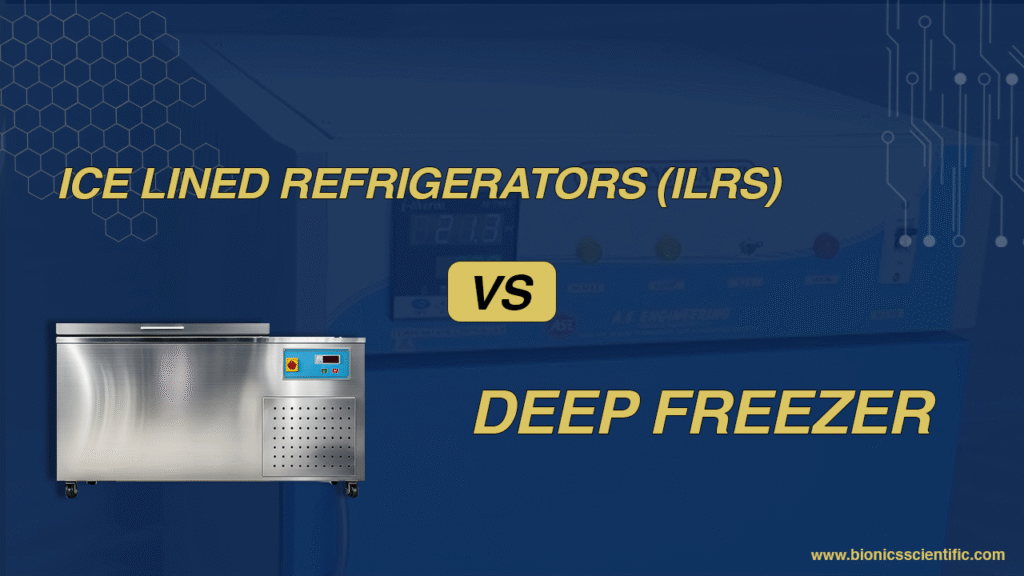
An ice-lined refrigerator (ILR) is designed to maintain temperatures typically between +2°C and +8°C, while a deep freezer is designed for applications that require storage below 0°C. The right choice depends on what you need to store and its required temperature range.
This guide compares ice-lined refrigerators and deep freezers by temperature range, applications, cooling requirements, and storage purpose to help you select suitable cold-storage equipment.
- Ice Lined Refrigerator vs Deep Freezer: Understanding the Basics
- Ice Lined Refrigerator vs Deep Freezer: Quick Answer
- What is a deep freezer?
- Which One Should You Use?
- Ice Lined Refrigerator vs Deep Freezer: Key Differences Explained
- WHO Guidelines on Vaccine Storage
- Final Thoughts
- Looking for a reliable Ice Lined Refrigerator for your application?
Ice Lined Refrigerator vs Deep Freezer: Understanding the Basics
What is an Ice Lined Refrigerator
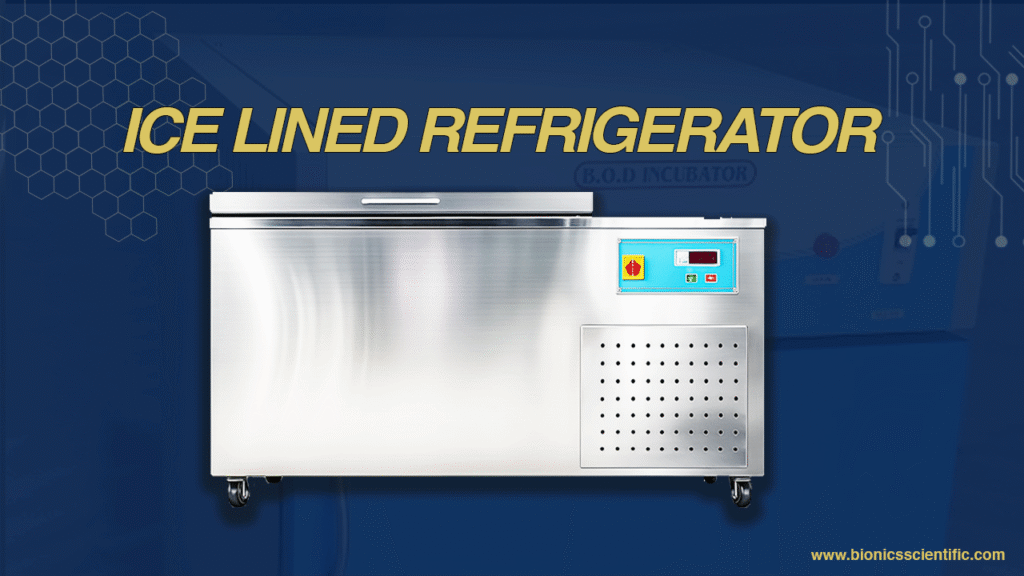
Ice lined refrigerators (ILRs) are refrigerators meant for cold chain storage at a controlled +2°C to +8°C to store vaccines and other approved refrigerated items.
How Does Ice Lined Refrigerator Work?
The refrigeration system will cool the chamber and the ice liner. When the liner is fully frozen, it will help act as a thermal reserve in case there is power failure. The exact holdover period varies depending on various factors like model, temperature, loading condition, and door opening frequency.
Applications of Ice Lined Refrigerator
- Vaccines storage
- Health care cold chain facilities
- Hospitals and vaccination centers
- Pharmaceutical products that require +2°C to +8°C storage
- Facilities where power failures may be an issue
The key difference lies in temperature stability. ILRs are designed to prevent temperature fluctuations, while deep freezers focus on achieving lower temperatures rather than maintaining uniform cooling conditions.
Explore our laboratory refrigerator range
Ice Lined Refrigerator vs Deep Freezer: Quick Answer
|
Requirement |
Best Choice |
|
Vaccine storage at +2°C to +8°C |
Ice Lined Refrigerator |
|
Stable refrigerated cold-chain storage |
Ice Lined Refrigerator |
|
Storage during power interruptions |
Ice Lined Refrigerator |
|
Freezing materials below 0°C |
Deep Freezer |
|
Long-term frozen sample storage |
Deep Freezer |
|
Freezing ice packs |
Deep Freezer |
|
Very low-temperature storage |
Deep Freezer |
What is a deep freezer?
Deep freezers are made for storing materials and samples at low temperatures of below 0°C. The exact temperature is defined by the application and type of the freezer. Laboratory deep freezers can be found in various temperature ranges such as about -20°C, -40°C and -80°C.
In contrast to an ILR that is made for refrigerated storage in the range of +2°C to +8°C, a deep freezer is meant for uses requiring freezing conditions.
Deep Freezers Uses
- Laboratory sample storage
- Pharmaceutical uses
- Medical storage
- Research laboratories
- Specimen storage
- Freezing of materials and ice packs where necessary
The correct temperature of the freezer should always be chosen according to the needs of the stored material.
Check our deep freezer systems for laboratory and medical use
Which One Should You Use?
Choose an Ice Lined Refrigerator (ILR) if:
– You need to store vaccines between +2°C to +8°C
– You operate in areas with frequent power cuts
– You require stable and uniform cooling
Choose a deep freezer if:
– You need to store vaccines or materials below 0°C
– You need to freeze ice packs for transportation.
– Your application involves long-term frozen storage.
Some healthcare and cold-chain facilities may use both types of equipment, depending on the storage temperature requirements of the vaccines, materials, or ice packs being handled.
Ice Lined Refrigerator vs Deep Freezer: Key Differences Explained
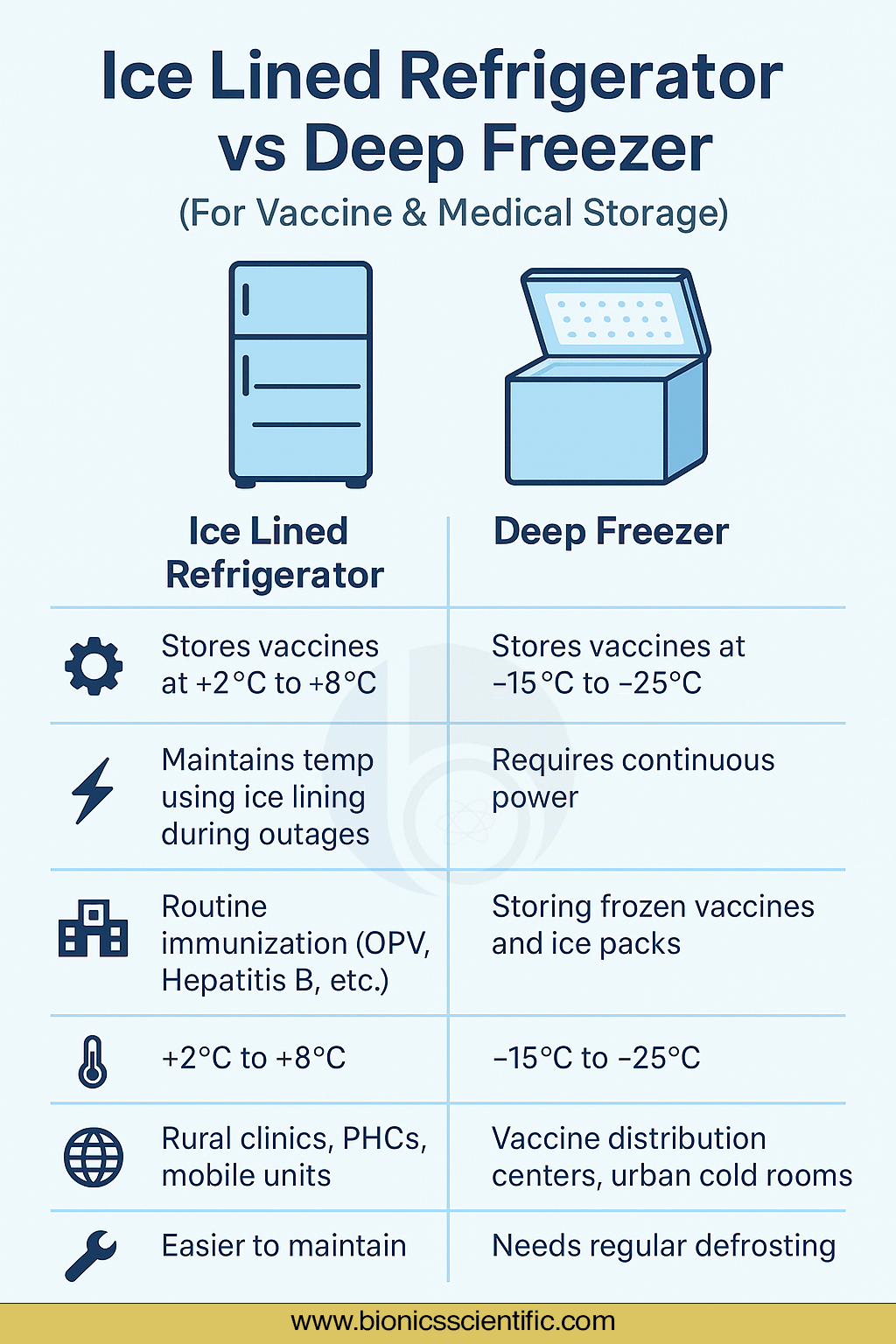
| Feature | Ice Lined Refrigerator | Deep Freezer |
|---|---|---|
| Temperature Range | +2°C to +8°C | Below 0°C; exact range depends on the freezer model and application |
| Main Use | Temperature-controlled vaccine storage | Frozen storage of laboratory samples and temperature-sensitive materials |
| Cooling System | Ice lining backup | Compressor-based |
| Power Failure Safety | High (temperature maintained longer) | Low |
| Typical Users | Hospitals, clinics | Research labs, pharma |
This comparison clearly shows that both systems are designed for completely different temperature requirements and applications.
WHO Guidelines on Vaccine Storage
Vaccine storage requirements depend on the specific vaccine and applicable cold-chain guidance. The storage equipment should therefore be selected according to the required temperature range rather than simply choosing a refrigerator or freezer based on capacity.
For vaccine programmes, always follow the manufacturer’s storage instructions, applicable WHO guidance and the facility’s cold-chain SOPs. The selected equipment should be capable of maintaining the required conditions and should have appropriate temperature monitoring and alarm features where required.
Investing in the right equipment also ensures compliance with national immunization programs and avoids vaccine wastage.
Final Thoughts
An Ice Lined Refrigerator and a deep freezer are designed for different cold-storage requirements. An ILR is the better choice when your application requires controlled +2°C to +8°C refrigerated storage, while a deep freezer is designed for applications that require temperatures below 0°C.
Before making either choice, consider the necessary storage temperatures, applications, capacities, monitoring needs, power needs, and any other relevant criteria. Considering all these parameters when choosing equipment will ensure that the temperature sensitive products remain intact.
Do you need assistance with cold storage selection? Consult Bionics Scientific for your applications and temperature needs.
If you’re setting up or upgrading your cold chain equipment, ensure each unit meets WHO standards and matches your storage needs.
Looking for a reliable Ice Lined Refrigerator for your application?
Bionics Scientific provides ice lined refrigerators and other cold-storage equipment for hospitals, laboratories and pharmaceutical applications.
Contact us today to get expert guidance and the right solution for your application.
Frequently Asked Questions
What is the difference between an ice lined refrigerator and a deep freezer?
An ice lined refrigerator is designed for refrigerated storage, commonly +2°C to +8°C for vaccine cold-chain applications. A deep freezer is designed for frozen storage below 0°C, with the required temperature depending on the application.
Can an ILR be used as a deep freezer?
No. An ILR is designed for controlled refrigerated storage and should not be treated as a substitute for equipment designed for frozen storage.
Which is better for vaccine storage: ILR or deep freezer?
It depends on the storage requirements of the specific vaccine. Vaccines requiring +2°C to +8°C storage generally require an appropriate vaccine refrigerator such as an ILR, while vaccines or materials requiring frozen storage require suitable freezer equipment.
Does an ILR work during a power cut?
The ice lining provides thermal reserve that can slow the increase in chamber temperature during a power interruption. Actual hold-over depends on the model, ambient conditions, loading and door-opening frequency.
What temperature does a laboratory deep freezer maintain?
The temperature depends on the model. Bionics Scientific’s current laboratory deep-freezer range includes approximately -20°C, -40°C and -80°C configurations.
How do I choose the right cold-storage equipment?
Storage temperature comes first, followed by use, capacity, temperature measurement, power supply, alarm systems, and any other legal considerations.