Buying a muffle furnace specifications usually starts with a fairly specific problem: a lab needs to run ash-content tests to a particular standard, or a metallurgy unit needs a chamber that holds temperature steady during annealing. The equipment itself is simple in concept — an insulated, electrically heated chamber that keeps a sample away from flame and combustion gases—but the right unit depends heavily on what you’re testing and how often. This guide walks through how a muffle furnace works, what the specifications actually mean for your process, how laboratory and industrial models differ, and what shapes the price of a muffle furnace’s specifications before you sit down to compare quotations.
What Is a Muffle Furnace?
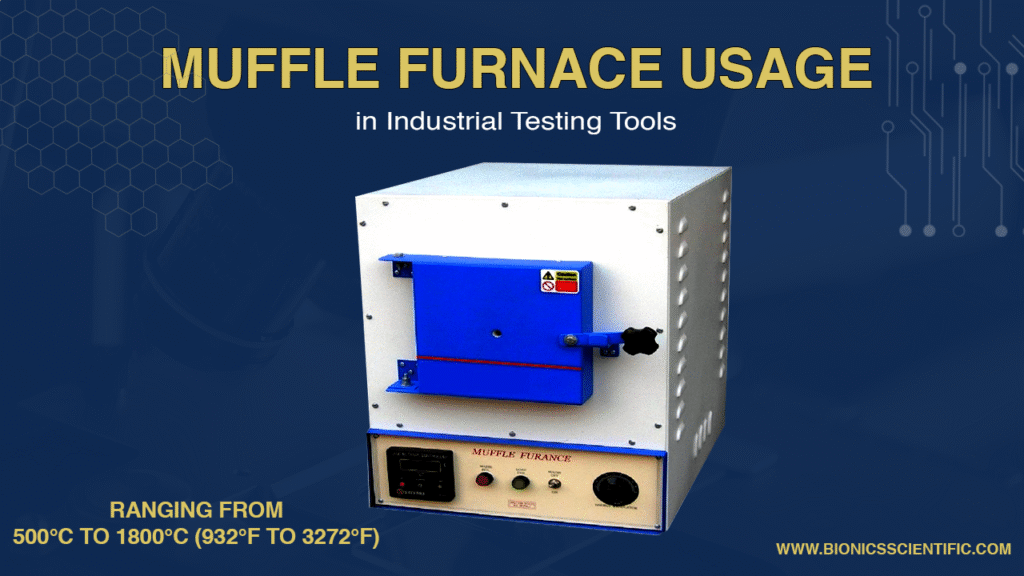
It’s an electrically heated chamber, insulated on all sides, built so the sample never touches the heating elements or combustion by-products directly. That separation is the entire point of the design — it lets you heat a sample to a controlled, repeatable temperature without contaminating it or exposing it to an open flame.
Refractory insulation lines the chamber walls, holding heat inside while keeping the outer casing at a manageable temperature. Heating elements sit around or within these walls rather than inside the working space, and a controller manages how much power reaches them. The result is a heating environment that behaves consistently from one run to the next, which is why the muffle furnace specifications remain a fixture in laboratories doing ashing, calcination, and thermal testing.
How a muffle furnace specifications Works
Resistive heating does the actual work. Current passes through the heating elements—usually a high-temperature alloy or resistance wire—and they radiate heat into the chamber. A sensor inside tracks the temperature and feeds that reading back to the controller, which cuts or increases power to hold the set point.
Some units use a simple PID controller that maintains a fixed temperature and little else. Others come with programmable controllers capable of running multi-step cycles: ramp up at a defined rate, hold for a set period, then cool down on a schedule. Whether you get one or the other depends entirely on the model you choose—it’s not a standard inclusion across the board. Insulation quality plays into the equation too; poor insulation means uneven heat distribution, which shows up as inconsistent readings across the chamber even when the set point looks correct on the display.
Muffle Furnace Specifications
| Parameter | Typical Configuration | Selection Importance |
| Temperature rating (maximum) | Roughly 900°C to 1,400°C, depending on model | Sets the outer limit for your application |
| Continuous working temperature | Generally below the maximum rating | Governs realistic day-to-day operation and element life |
| Internal chamber dimensions | Varies by model; confirm against the datasheet. | Determines what actually fits inside |
| Capacity | Bench-top to industrial-scale volumes | Useful, but secondary to actual dimensions |
| Heating elements | Alloy or resistance-wire type | Affects heating speed and service life |
| Controller | Basic PID or programmable, model-dependent | Determines how much process control you get |
| Temperature accuracy | Typically within a few degrees, subject to model | Matters for regulated or comparative testing |
| Chamber uniformity | Depends on insulation and element layout | Affects consistency across a full sample load |
| Insulation | Refractory-grade, thickness varies | Influences energy use and outer-surface safety |
| Construction | Stainless or mild steel body, model-dependent | Affects corrosion resistance and longevity |
| Electrical supply | Single-phase or three-phase | Drives installation planning |
| Safety features | Available configurations vary | Protects operators and the unit itself |
Capacity figures on a spec sheet can be misleading on their own. Two furnaces rated at the same liter volume can have completely unique usable dimensions—one wider and shallower, one taller and narrower—and that difference decides whether your crucibles or trays actually fit with room for airflow. Always check internal length, width, and height before assuming a “20-liter” or “36-liter” unit will work for your sample holders.
Muffle furnace specifications Uses in Laboratories and Industry
Ash content and loss-on-ignition testing are probably the most routine applications—the sample is heated until organic material burns off, leaving a residue that gets weighed. Gravimetric analysis follows a similar logic. Heat treatment work, including annealing and tempering, uses the same basic chamber but for a different purpose: altering the internal structure of a metal through controlled heating and cooling rather than isolating a residue.
Ceramics and glass testing rely on thermal cycles to observe how materials behave under heat—shrinkage, color change, and structural stability. Cement and construction-material labs run similar tests for composition checks. Coal analysis, pharmaceutical testing, food-sample preparation, and environmental sample work all use muffle furnace specifications regularly, and so do university and research labs for coursework and experiments. Manufacturing QC departments use them for routine batch checks, often several times a day. The operating temperature and hold time in each case come from the applicable test method, not from a general rule—a food-ash procedure and a ceramics firing schedule have nothing in common beyond both needing a muffle furnace specifications.
Laboratory vs Industrial Muffle Furnace
| Selection Point | Laboratory Muffle Furnace | Industrial Muffle Furnace |
| Chamber size | Compact, bench-top | Larger, floor-standing |
| Workload | Occasional to moderate batches | High-volume, repeated batches |
| Duty cycle | Intermittent | Extended or near-continuous |
| Power requirement | Usually single-phase | Often three-phase |
| Control system | Basic to programmable | Typically programmable, process-linked |
| Installation | Simple bench placement | Dedicated space, electrical planning |
| Construction | Lab-bench compatible | Heavy-duty industrial build |
| Typical use | Testing, QC, research | Manufacturing, bulk heat treatment |
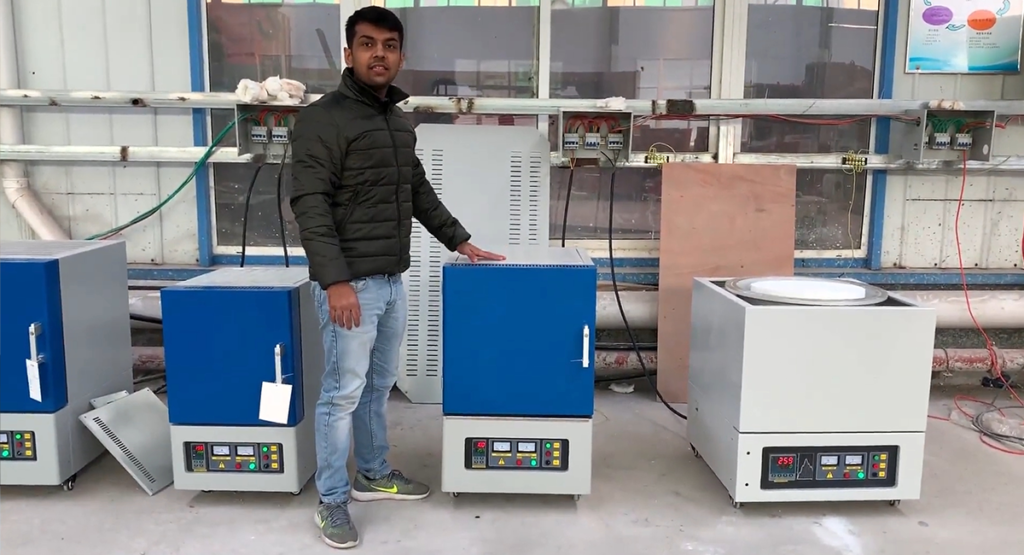
This division isn’t a rigid split—some laboratory-grade units include programmable control, and some smaller industrial furnaces run on single-phase power. Treat the table as a general pattern rather than a rule that applies to every model on the market. What actually matters is your daily heating frequency and recovery time between cycles, not just where the furnace happens to sit on a size chart.
What Determines muffle furnace specifications Price?
Temperature rating is one factor, but rarely the deciding one. A furnace rated to 1,200°C with basic insulation can cost less than a 1,000°C unit built with heavier insulation and a larger chamber. Internal dimensions matter more than most buyers expect, since a bigger usable chamber means more material and a stronger structural build.
Heating-element type and controller choice both move the price meaningfully — a programmable controller with data logging costs more than a basic set-and-hold unit. Electrical load, safety features such as over-temperature cut-off, and any customisation for a specific chamber shape or door configuration add further variation. If you’re preparing a purchase inquiry, it helps to have your temperature range, chamber size, and controller preference ready—a quotation built against those specifics will be far more useful than a generic price list.
How to Select the Correct Model
- Define the sample type and test method you’re working with.
- Fix the required working temperature, not just the maximum.
- Add a reasonable temperature margin above your normal working point.
- Work out chamber dimensions from your actual crucibles or trays.
- Estimate typical batch load and how often you’ll run the furnace.
- Decide on heating cycle needs — single hold or multi-step ramping.
- Choose between basic and programmable control accordingly.
- Confirm your electrical supply matches the unit’s requirement.
- Check ventilation and exhaust arrangements for your lab space.
- Review safety features, documentation, and after-sales support before ordering.
Why Consider Bionics Scientific?
Bionics Scientific manufactures and supplies laboratory and industrial muffle furnaces for buyers across India, working from the application backward rather than pushing a fixed catalog. That usually means a direct technical conversation about your temperature range, chamber size, and controller needs before any specification gets finalized.
Customization is considered where it’s practically feasible—chamber dimensions, door type, or controller configuration can sometimes be adjusted to fit a specific process. The team helps match a configuration to your requirement and stays available for quotation and service queries as your testing or production needs change.
Request a Technical Quotation
Share your application and sample type, required working temperature, internal chamber dimensions, sample quantity or batch load, controller preference, available power supply, and delivery location. That’s enough for Bionics Scientific to recommend a configuration suited to your actual process, rather than a generic model.
Request a Technical Quotation Discuss Your Application with Bionics Scientific
Frequently Asked Questions
What is a muffle oven?
Typical work includes burning off organic matter for ash testing, running annealing cycles on metal parts, firing ceramic samples, and batch checks in a QC lab.
What temperature does a muffle furnace get to?
Ratings differ by manufacturer and design, typically landing somewhere in the 900°C–1,400°C band—always verify the number against the specific unit’s datasheet.
How does an electric muffle furnace work?
Inside the chamber, a sensor reports the temperature to a controller, which adjusts current to the heating elements so the chamber holds steady at the target value.
What is the difference between an oven and muffle furnace specifications?
Drying and moisture removal happen in an oven at modest heat; muffle furnace specifications push far hotter and shield the sample from open flame and exhaust gases entirely.
How is the correct chamber size selected?
Take physical measurements of the crucibles or trays you’ll actually load, then compare those against internal chamber dimensions rather than trusting a liter-capacity number alone.
What determines muffle furnace prices?
Insulation thickness, element material, chamber dimensions, controller type, power configuration, and custom modifications each pull the final quoted price in one direction or another.
Which heating elements are used in muffle furnaces?
Manufacturers typically fit resistance wire or high-temperature alloy elements, selected according to the furnace’s maximum rated temperature and how the chamber is engineered.
Can a muffle furnace be used for ash testing?
It’s a standard application—the sample is held at a specified temperature until only inorganic residue remains, which is then weighed for the ash-content result.
What safety features should buyers check?
Check that the unit has an over-temperature shutoff, a solid door latch, and properly insulated exterior panels, as these are not standardized across all models.
Where can I buy a muffle furnace in India?
Laboratory and industrial units from companies like Bionics Scientific can be configured to a buyer’s temperature requirements, chamber size, and application needs.