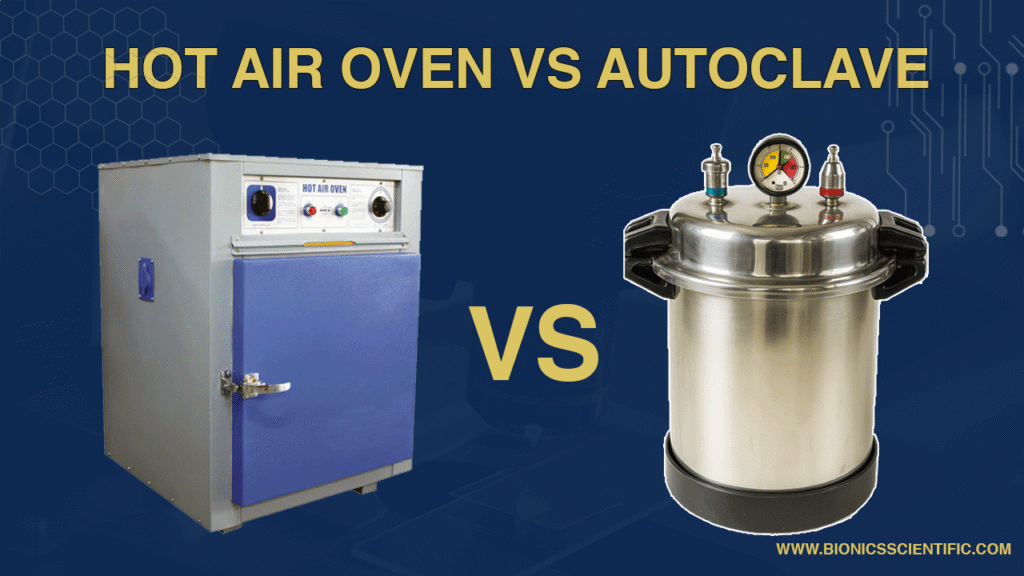
A Hot air ovens is a laboratory equipment used for dry heat sterilization, drying, and thermal testing applications. It provides uniform temperature distribution and is widely used in pharmaceutical, microbiology, research, and industrial laboratories.
|
Specification |
Details |
|
Temperature Range |
Up to 200°C |
|
Controller |
PID Digital |
|
Air Circulation |
Forced Air |
|
Safety |
DIN12880 |
|
Capacity |
22L–600L |
Hot Air Oven Temperature and Time Chart for Sterilization
Understanding the correct temperature and time is essential for proper sterilization. Below is a standard hot air oven temperature and time chart used in laboratories.
|
Material |
Temperature |
Time |
|
Glassware |
160°C |
2 hours |
|
Metal instruments |
170°C |
1 hour |
|
Powders |
150°C |
1.5 hours |
|
Culture media |
160°C |
2 hours |
Table of Contents
- What is a Hot Air Oven?
- How Does a Hot Air Oven Work?
- Hot Air Oven Diagram
- Principle of Hot Air Oven
- Instrumentation (Parts) of Hot Air Oven
- Advantages of our Hot Air Ovens
- Benefits of Using a Hot Air Oven
- Limitations of Hot Air Oven
- Precautions When Using a Hot Air Oven
- Maintenance and Best Practices
- What Can (and Can’t) Go in the Oven?
- What is a hot air oven used for?
- How does a hot air oven work?
- What is the basic temperature range of a hot air oven?
- What materials can be sterilized in a hot air oven?
- What is the difference between a hot air oven and an autoclave?
- Why is dry heat sterilization necessary in laboratories?
- What safety precautions should be taken when using a hot air oven?
- How do you maintain a hot air oven?
- Where are hot air ovens generally used?
- Conclusion
Need a Laboratory laboratory drying oven for Accurate Heating and Sterilization?
Bionics Scientific manufactures <internal link on “laboratory drying oven”> designed for sterilization, drying, and thermal testing applications. Our systems offer stable temperature control, durable chamber construction, and customizable capacities for research labs, pharmaceutical units, and industrial facilities.
What is a hot air oven?
A laboratory oven is used in labs. This equipment works on what is used to dry and heat materials. Unlike autoclaves, which use pressurised steam, hot ovens use circulating air to sterilise. It is used in medical and industrial environments to ensure the cleanliness and safety of equipment and materials.
How Does a Hot Air Oven Work?
Hot air ovens heat things evenly by circulating hot air inside the chamber. Here is a simple description of the process.
- Heating Element: Heats the air inside the oven.
- Fan: Ensures uniform temperature distribution by circulating hot air.
- Thermostat: Controls the temperature to maintain a set point.
- Insulated Chamber: Ensures minimum heat loss and smooth use of energy.
The process typically involves placing items on racks within the oven, & setting the desired temperature and duration, and allowing the oven to heat and sterilize the items.
Step-by-Step Guide for Operating Hot Air Ovens
- Power on and Preheat: Plug in the oven and switch it on. Preheat for around 30 minutes so the chamber reaches the specific temperature before loading items.
- Set Temperature and Time: Use the temperature gauge or thermostat to set the required temperature and holding time, depending on the load size and type of material.
- Load Items Properly: Place the items on the trays or racks, ensuring you leave enough space between them for proper air circulation. This promotes even heating and effective sterilization.
- Secure the Door: Close the door tightly and fasten any screws or locks to prevent heat loss.
- Monitor the Cycle: Periodically check the digital display to ensure the chamber has reached and maintains the set temperature for the entire holding period.
- Cooling Down: Once the cycle is complete, switch off the oven and let it cool before opening the door. This step prevents sudden temperature changes that could damage the samples or create safety hazards.
- Remove Items Safely: After cooling, carefully remove the sterilized items using oven mitts or tongs to avoid burns.
- Close the Oven: Close the door after removing your items to maintain cleanliness and prevent dust from entering.
This straightforward process ensures that everything inside the dry heat sterilizer is evenly and thoroughly sterilized, making it a reliable choice for laboratories, clinics, and industries where dry heat sterilization is essential.
Laboratory Oven Diagram
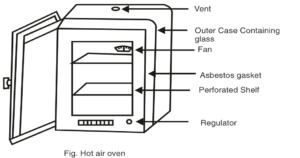
Figure: Hot Air Oven. Image Source: Biology Reader.
Dry Heat Sterilization Principle
Hot air oven relies on dry heat sterilization, where convection, conduction, and radiation play interlocking roles. Electrical elements warm the enclosed air, and circulating fans promote an even temperature profile throughout the chamber. Solid samples absorb this energy; the outer skin heats first, and conduction gradually routes that heat inward. In microbial cells, the rapid loss of intracellular moisture accelerates oxidative damage, denatures proteins, and raises ionic concentrations to lethal thresholds.
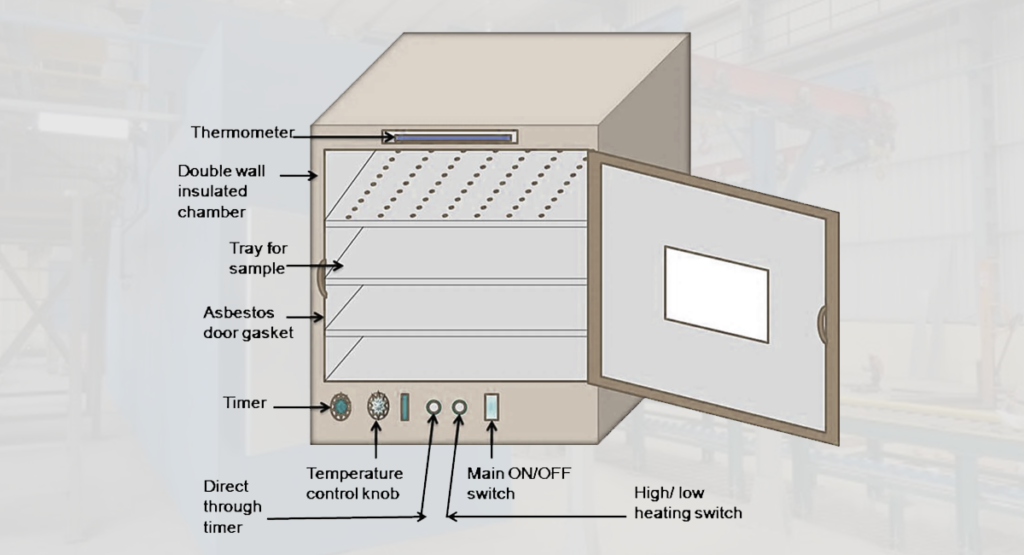
Instrumentation (Parts) of Hot Air Oven
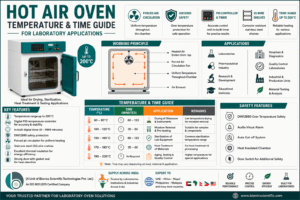
Figure: Parts of Hot Air Oven.
A hot air oven is primarily reserved for materials that can withstand prolonged heating without melting. At uplifted temperature, the dry heat transmute proteins and thereafter eliminates pathogenic microorganisms and dormant bacterial spores. Standard dry-heat protocols include 170 C for thirty minutes, 160 C for sixty minutes, and 150 C for a full 150 minutes.
Advantages of our Hot Air Ovens
- An industrial drying oven can kill microorganisms without the water or steam of a conventional autoclave.
- Operating costs are very modest, and the control interface typically requires little more than a start button.
- Our dry heat sterilizer models reach temperatures around 180 to 250°C.
- Our compact benchtop designs occupy less space than a typical office printer and connect effortlessly to a standard wall socket.
- The workflow uses only circulating dry heat, guaranteeing that metal tools and glass slides remain completely free of rust.
- The internal chamber’s shallow depth allows researchers easy and comfortable access without any awkward maneuvers.
- Unlike autoclave cylinders, our unit generates just a few psi of overpressure, significantly minimizing any risk of explosive failure.
- We use no liquid disinfectants or volatile compounds, ensuring that no corrosive residue remains on trays after cooling.
- The uniform airflow delivers heat deeply into dense items like porcelain syringes, confidently achieving lethal temperatures on every interior surface.
Benefits of Using a Hot Air Oven
• Uniform temperature distribution
• Moisture-free sterilization
• No corrosion on metal instruments
• Suitable for glassware and powders
• Low operating and maintenance cost
Limitations of Hot Air Oven
Hot air ovens have many good points, but they also have some limitations that make them less suitable for certain types of sterilisation.
- Not Suitable for All Materials: An industrial drying oven can’t be used for items made of rubber, most plastics, or surgical dressings because the dry heat can cause these materials to melt, warp, or get damaged. For these items, using an autoclave or chemical disinfectants is a safer choice.
- Some Germs Are Hard to Kill: Dry heat doesn’t kill all germs equally well. Some tough bacteria and harmful proteins called prions can survive a normal Drying Oven cycle. Since there is no steam or pressure, laboratory ovens are not always as reliable as moist-heat methods in killing all microbes.
- Takes More Time: Laboratory ovens need longer to reach the right temperatures and keep them there. This means sterilising with hot air often takes several hours, which is slower than steam sterilisers, open flames, UV light, or chemical disinfectants. So, if you need immediate results, laboratory oven might slow you down.
In short, industrial drying ovens work very well for sterilising glassware, metal tools, and ceramics. But because of their limits, they can’t replace other sterilisation methods when speed or handling different materials is important.
Hot Air Oven Price in India
|
Type of Hot Air Oven |
Approximate Price Range |
|
Small Laboratory Forced Air Oven |
₹18,000 – ₹35,000 |
|
Benchtop Sterilization Oven |
₹35,000 – ₹75,000 |
|
Industrial Drying Oven |
₹75,000 – ₹2,00,000+ |
|
Customized Hot Air Oven Systems |
Depends on specifications |
Hot air oven prices depend on chamber size, temperature range, insulation quality, airflow system, automation features, and customization requirements. Benchtop laboratory models are commonly used in research labs and educational institutes, while industrial drying ovens are preferred for pharmaceutical and manufacturing applications.
Need a Laboratory Hot Air Oven for Accurate Heating and Sterilization?
✓ Temperature Range up to 200°C
✓ PID Digital Controller
✓ DIN12880 Safety Protection
✓ 22L to 600L Capacities
✓ Custom Manufacturing Available
Bionics Scientific manufactures laboratory Drying Oven for pharmaceutical, microbiology, research and industrial applications.
Contact us today for technical specifications, pricing and customized configurations at info@bionicsscientific.com | +91 9111161955
Precautions When Using a Heating Chamber
To ensure both safety and effective sterilization, it’s important to follow some key precautions whenever you’re operating a Heating Chamber:
- Use Only Suitable Materials: Confirm that everything placed inside is compatible with dry heat sterilization avoid materials that can melt, ignite, or degrade at high temperatures. Never place combustible or flammable items in the oven.
- Prepare Items Appropriately: Wrap instruments, glassware, or pipettes in paper or suitable wrapping before loading them into metal or heat-resistant containers. Cotton wool plugs are commonly used to protect the mouths of test tubes and flasks during sterilisation.
- Allow Cooling Time: It’s tempting to get your hands on those freshly sterilised beakers right away, but always let the oven cool to at least 40°C before opening the door. Opening too soon can cause temperature shocks, potentially cracking glassware.
- Handle with Care: When unloading, use thermal gloves or tongs, not bare hands, to prevent burns and accidental drops.
- Avoid Overcrowding: Give your items some breathing room. Overloading shelves restricts the circulation of hot air, so space items evenly for consistent results.
- Proper Arrangement: Ensure objects have enough space between them on the shelves to allow hot air to circulate freely around every surface.
By keeping these best practices in mind, you’ll protect both your lab equipment and yourself while maximizing the sterilization efficiency of the oven.
Maintenance and Best Practices
Proper maintenance ensures the optimal performance of the working of the drying oven:
- Regular Cleaning: Clean the chamber and racks regularly to prevent contamination.
- Routine Inspections: Check the heating element, fan, and thermostat for any signs of wear or damage.
- Calibration: Ensure the thermostat is accurately calibrated for precise temperature control.
- Troubleshooting: Address common issues such as uneven heating or temperature fluctuations promptly to maintain efficiency.
What Can (and Can’t) Go in the Oven?
A Laboratory Oven is perfect for sterilizing things that can withstand high temperatures but are sensitive to moisture. This includes:
- Glassware (like flasks, beakers, and pipettes)
- Metal instruments (like forceps and scalpels)
- Powders, oils, and waxes that are heat-stable
On the other hand, you should never put things like plastic, rubber, or most fabrics in a laboratory drying oven, as they can melt, char, or be destroyed.
This is the main difference between a laboratory drying oven and an autoclave. An autoclave uses pressurized steam (moist heat) to sterilize, which works at a lower temperature and for a shorter time. While an oven is great for glassware and powders, an autoclave is the go-to for liquids, surgical tools, and fabrics. Think of it as the difference between baking (dry heat) and pressure cooking (moist heat).
FAQ
Q1. Standard models are available up to 200°C, 250°C and 300°C.
A. Laboratory hot air ovens are available in various temperature ranges, with standard models operating up to 200°C, 250°C, or 300°C, depending on application requirements.
Q2. How do I choose the right hot air oven size for my laboratory?
A. The ideal size depends on sample volume, chamber capacity requirements, and available laboratory space. Hot air ovens are available in multiple capacities, from small benchtop units to large industrial models.
Q3. What is the difference between a hot air oven and an incubator?
A. A hot air oven is designed for drying, sterilization, and heating applications at higher temperatures, while an incubator maintains controlled temperatures for biological sample growth and storage.
Q4. Does the hot air oven include safety features?
A. Yes. Modern laboratory hot air ovens are equipped with DIN12880 safety protection, over-temperature cut-off systems, alarms, and insulated chambers for safe operation.
Q5. What type of temperature controller is used in the hot air oven?
A. Most laboratory hot air ovens are fitted with a digital PID temperature controller that ensures accurate temperature regulation and uniform heating throughout the chamber.
Q6. Can the hot air oven be customized according to laboratory requirements?
A. Yes. Manufacturers often provide customized chamber sizes, temperature ranges, shelving options, and control systems to meet specific laboratory and industrial needs.
Q7. Is forced air circulation important in a hot air oven?
A. Yes. Forced air circulation improves temperature uniformity, reduces heating time, and ensures consistent drying and sterilization results throughout the chamber.
Q8. Do you supply laboratory hot air ovens internationally?
A. Yes. Laboratory hot air ovens can be supplied across India and exported to countries including the UAE, Africa, Nepal, Philippines, Malaysia, and other international markets with suitable export documentation and support.
Conclusion
Hot Air ovens are important equipment in various industries, providing a reliable and efficient method for material heating and drying. Their ability to maintain stable temperatures and handle large amounts of material make them indispensable in medical, laboratory and industrial environments. How they work and taking proper care of them is essential in maintaining the highest hygiene and safety standards. In this laboratory oven video, we have explained the manufacturing process of hot air ovens.
Get the Right Hot Air Oven for Accurate Sterilization
Incorrect temperature settings can directly affect sterilization quality, testing accuracy, and laboratory safety. Choosing a reliable Dry Heat Sterilizer with proper temperature control and uniform heating helps reduce repeated testing, contamination risks, and operational delays.
Bionics Scientific manufactures high-performance laboratory hot air ovens designed for consistent sterilization results across pharmaceutical, microbiology, research, and industrial laboratories.
Contact our experts today to get the right hot air oven specifications, customization options, and best price for your laboratory requirements.